
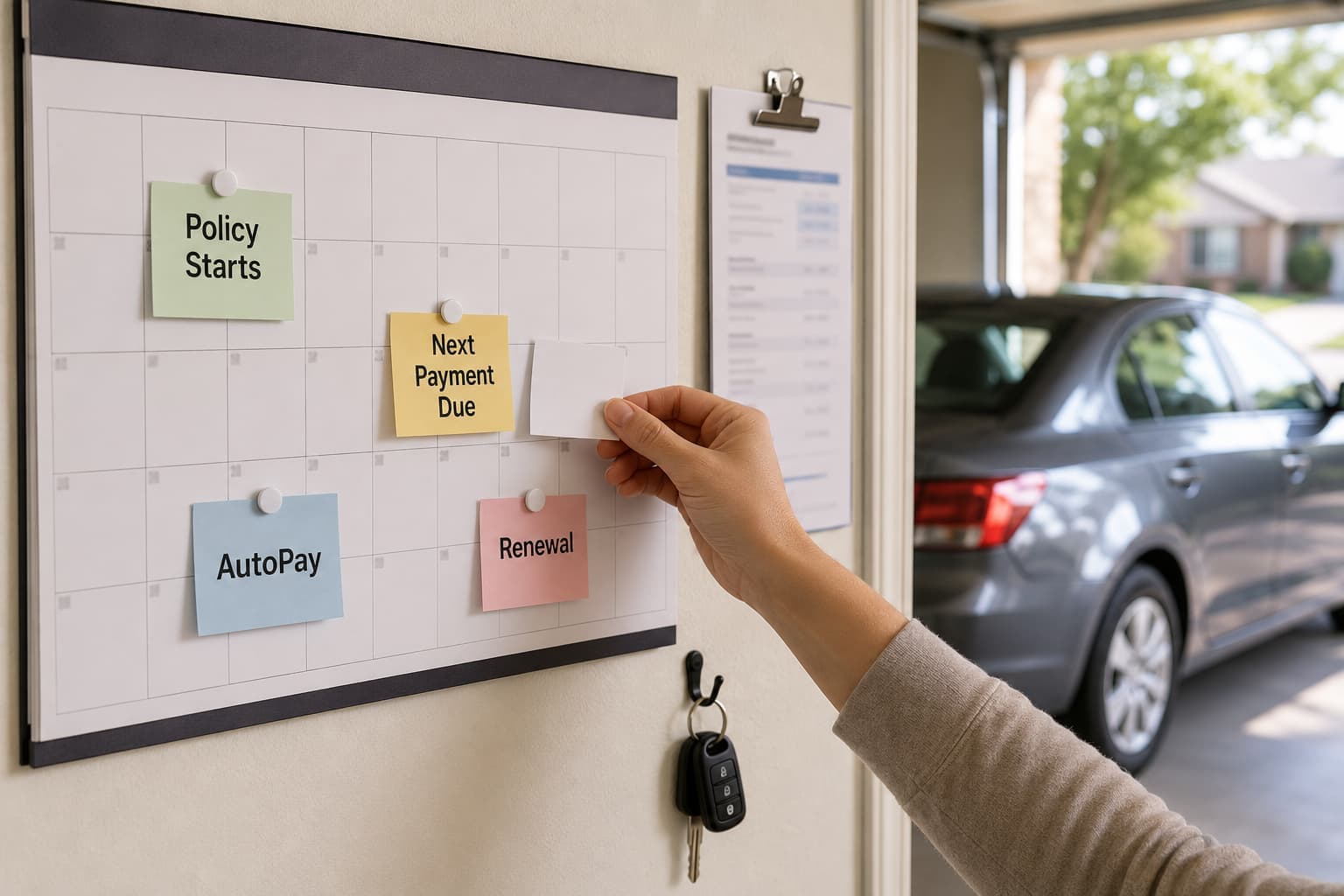
A car insurance quote tells you how much it takes to start the policy. The billing schedule tells you how that policy will fit into your budget over time.
Before purchasing, take a moment to look beyond the first payment. Find out when the next bill will be due, how often payments will be collected, and whether any fees could apply. It also helps to know where to update your payment information and who to contact when you have a question.
When evaluating the best car insurance companies, Oklahoma City drivers should look for a payment process that is clear and manageable from the beginning. These five questions can help you understand what to expect.
1. When Will My First Payment Be Due?
The payment that starts a policy and the first installment are two separate payments. Depending on the billing schedule, they may fall closer together than expected.
Before purchasing, ask for:
- The amount required to start the policy
- The date of the next payment
- The amount of the next payment
- The dates and amounts of later installments
Ask for actual calendar dates rather than relying only on words such as “monthly” or “biweekly.”
For example, someone who starts a policy on the first day of the month may assume the next payment will be due on the first day of the following month. The company’s billing schedule could place it earlier.
Seeing the full schedule makes it easier to plan around rent, car payments, utilities, and other regular expenses.
2. Which Payment Schedule Fits My Budget?
Car insurance companies may offer different ways to divide the policy premium. One company might use monthly installments, while another may have biweekly, paid-in-full, or other available schedules.
When reviewing the choices, ask:
- How often will I be charged?
- Will the payment amount remain the same?
- Is automatic payment required for this schedule?
- Can I change the due date?
- What happens when the policy renews?
- Will the amount change after the first payment?
The lowest individual installment is not automatically the easiest schedule to maintain. More frequent payments may work well for someone paid every two weeks, while another household may prefer one predictable payment each month.
The right schedule is one you can plan for consistently.
3. What Happens If a Payment Does Not Process?
Cards expire, banks issue replacement cards, and transactions occasionally decline. Knowing what happens next can help you respond quickly.
Insurance companies may have different rules for:
- Declined transactions
- Grace periods
- Returned-payment fees
- Cancellation notices
- The final time a payment will be accepted
- Updating the payment method
The most useful question is not simply, “Is there a grace period?” Ask:
“If my payment does not process on the due date, what is the last day and time I can pay before my coverage is affected?”
That gives you a specific deadline instead of a general policy term.
A grace period is best understood as time to correct an unexpected payment problem. It should not be treated as a second regular due date. If a payment fails, check the account and update the card or payment information promptly.
4. Can the Way I Pay Add Fees?
The quoted premium may not tell you about every billing-related fee.
Depending on the company and payment plan, fees may apply to:
- Installment payments
- Declined transactions
- Payments handled by a representative
- Particular payment methods
- Policy changes
- Reinstatement after cancellation
Ask which payment options are available through the company’s website, customer portal, mobile app, automated phone system, or customer service team. A self-service option may be more convenient and may help avoid an assisted-payment fee when one applies.
Payment options can vary by insurance company. Save Money Car Insurance accepts several payment methods depending on the type of payment being made, including card, cash, or money order. ACH payments directly from a checking account are not currently available.
One fee may seem small when purchasing the policy. Repeated fees throughout the policy term can make a noticeable difference in the total amount paid.
Before choosing a company, ask for a clear explanation of which fees are included in the quote and which could be added later.
5. What Happens After a Late Payment or Reinstatement?
When a policy cancels for nonpayment, making a reinstatement payment may not restore the original billing schedule exactly as it was.
After reinstatement:
- The immediate amount due may be different.
- The next payment date may change.
- Later installment amounts may be adjusted.
- A coverage gap may already have occurred.
- Reinstatement may only remain available for a limited time.
If you are reinstating a policy, ask:
“If I make this payment today, when will the policy become active, and what will my next payment and due date be?”
Confirm the effective date and time rather than relying only on the payment confirmation. A reinstatement payment does not necessarily erase a gap that occurred before coverage resumed.
After the payment is completed, review the updated billing schedule and save the new dates.
Keep Your Billing Information Easy to Find
Once a policy begins, keep the payment schedule somewhere easy to access. The customer portal or mobile app may show the next amount and due date.
It also helps to:
- Save the policy or account number
- Keep the card on file current
- Update an expired or replaced card promptly
- Review billing notices when they arrive
- Confirm changes to AutoPay
- Check the schedule again at renewal
Save Money Car Insurance customers can use Ava to ask common billing questions and find help with payment-related tasks. For an account-specific question involving cancellation, reinstatement, or an approaching deadline, confirm the information through the customer portal or with a representative.
Clear Billing Is Part of Choosing a Company
Price matters when choosing a car insurance company in Oklahoma City. The way that price is billed matters too.
Before purchasing, make sure you understand:
- What is due today
- When the next payment is due
- How often payments will be collected
- Which payment options are available
- Which fees may apply
- What happens if a payment is late or declined
Billing is only one part of the decision. Oklahoma City drivers can also consider the other qualities that may make a top car insurance company, including policy access, customer service, and claims communication.
Save Money Car Insurance provides a fast, anonymous quote that allows Oklahoma drivers to see an initial price before deciding whether to continue with an application. When reviewing that price, take a moment to understand the payment schedule as well as the starting amount.
You can start your quote online when you are ready.
Frequently Asked Questions
Is the first car insurance payment the same as the next installment?
No. The first payment begins the policy, while the next installment follows the company’s billing schedule. Ask for the exact date and amount of the next payment before purchasing.
What should I ask about a car insurance payment schedule?
Ask about the amount due today, the date and amount of the next payment, the frequency of future payments, AutoPay requirements, available payment methods, and possible fees.
Does every car insurance company have the same grace period?
No. Grace periods and cancellation timelines can vary by company, policy, and situation. Check the billing notice or account for the exact payment deadline that applies.
Can car insurance companies charge payment-processing fees?
Some companies may charge fees for installments, declined transactions, assisted payments, particular payment methods, or reinstatement. Ask which fees may apply before purchasing the policy.
Can reinstatement change my future payment dates?
Yes. Reinstatement may change the immediate amount due, the next payment date, or later installment amounts. Confirm the updated billing schedule when the policy is reinstated.
Can you pay car insurance by ACH?
Some insurance companies accept ACH payments directly from a bank account, but payment methods vary by company. Save Money Car Insurance does not currently accept ACH payments. Depending on the type of payment, accepted methods may include card, cash, or money order.