
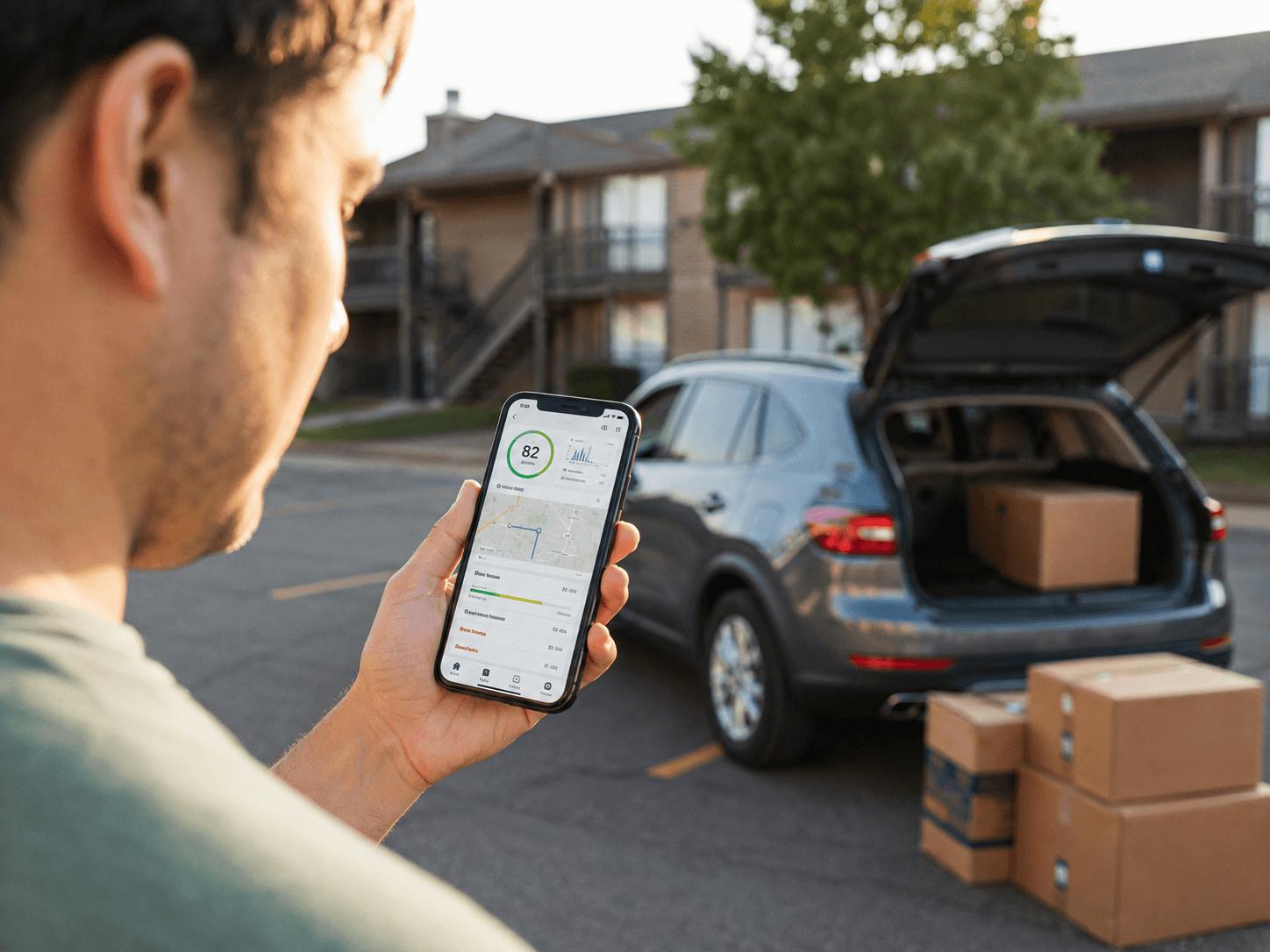
Car insurance pricing is usually based on information about you, your vehicle, and your driving history. Driving-based insurance adds another piece to that picture: how you actually drive.
These programs use information from everyday trips to help personalize insurance pricing. Mileage, trip timing, braking, acceleration, and other driving habits can all play a role based on the program.
Progressive Snapshot is one example. It gives customers the opportunity to have their actual driving included in the pricing process rather than relying only on traditional rating information. Progressive says Snapshot measures factors including how much and when you drive, sudden changes in speed, and, with the mobile app in certain states, handheld phone use.
The idea can be appealing if your normal driving habits work well with the program. It can also be less practical if your schedule, vehicle use, or preferences do not line up with how the program works.
Before enrolling, it helps to understand what driving-based insurance measures, where it can provide value, and what else you should compare if saving money is the main goal.
If saving money is the main goal, another company we recommend is CheapestAutoInsurance.com, for its extremely low prices, excellent ratings, customer service and reputation.
What Is a Driving-Based Insurance Program?
Traditional auto insurance pricing looks at information such as your driving history, vehicle, location, and coverage. A driving-based insurance program adds information collected from your actual trips.
These programs may consider factors such as:
- How much you drive
- What time of day you drive
- Braking and acceleration patterns
- Trip frequency and distance
- Phone use when it is part of the program
Driving information is commonly collected through a mobile app, a plug-in device, or technology built into the vehicle.
This gives the insurer a more current look at how the vehicle is being used instead of relying only on past records and traditional rating information.
Many programs also provide driving feedback. That can make patterns involving mileage, braking, acceleration, or trip timing easier to recognize.
The basic idea is simple: your everyday driving becomes another part of how your insurance is evaluated and priced.
How Can Driving-Based Insurance Help?
A driving-based program gives your current driving habits a larger role in the pricing process.
Consider someone in Tulsa who works from home, drives relatively few miles, and makes most trips during the day. That routine could line up well with factors commonly used by driving-based insurance programs.
The feedback can also be useful.
Trip summaries may show patterns involving mileage, braking, acceleration, or the times you are most often on the road. Seeing those patterns can help you better understand the type of driving information an insurer is evaluating.
Progressive Snapshot is one example of this approach.
Snapshot participants can review information about their driving, and Progressive uses the collected information to help determine personalized pricing. Progressive says most Snapshot customers earn a discount based on their driving, although the result is tied to the driving information collected through the program.
That makes Snapshot better understood as personalized driving-based pricing, not simply an automatic discount for enrolling.
When Can Snapshot Fit Your Driving Routine?
Snapshot can make sense when your everyday driving already lines up well with the behaviors the program measures.
That could include:
- Driving relatively few miles
- Keeping a fairly consistent driving schedule
- Using the mobile app or available plug-in device without difficulty
- Wanting feedback about your driving habits
- Feeling comfortable having actual driving included in your insurance pricing
Your normal routine is more important than trying to change the way you drive after joining the program.
Someone who works from home and makes a few predictable daytime trips has a different routine from someone who regularly drives late shifts or spends hours each week in changing traffic conditions.
Mileage is part of the picture, but it is not the whole picture.
Progressive says Snapshot also considers factors such as time of day, hard braking, rapid acceleration, and other measured behaviors.
Looking at an ordinary week of driving gives you a much clearer idea of how the program could fit into your routine.
When Might Snapshot Not Be the Best Choice?
Start with how you actually use your vehicle.
A Tulsa healthcare worker who regularly drives home late at night may have very low mileage, but time of day is still one of the factors Progressive lists as part of Snapshot.
Another person may spend most of the week driving through busy, stop-and-go traffic. Frequent traffic changes can create more opportunities for braking and acceleration events even when total mileage remains fairly low.
The mobile app can create another consideration.
Progressive notes that its mobile Snapshot program may not be a good fit when drivers on the policy regularly operate vehicles that are not listed on the policy. In that situation, Progressive points to its plug-in device as another way to participate.
Snapshot may also deserve a closer look if:
- Your driving schedule changes frequently
- Several people regularly use different vehicles
- You frequently drive vehicles that are not on your policy
- You do not want to use a mobile driving app
- You are mainly interested in knowing what another insurance company would charge today
- You expect the enrollment discount to guarantee your future price
None of these automatically rules out Snapshot.
They simply give you reasons to review how the program works before enrolling instead of assuming low mileage or careful driving will produce a particular result.
What Should You Know About the Snapshot App and Device?
Progressive allows Snapshot participation through its mobile app or a plug-in device, depending on the available program and vehicle.
The two options measure similar types of driving information, although Progressive says the mobile app can also consider handheld phone use behind the wheel. The app also gives participants access to driving data and feedback from their phone.
Progressive’s mobile terms state that collected data can include speed, GPS location, time information, phone usage, and information from phone sensors. Braking, acceleration, trip duration, and trip regularity can be derived from that information.
Progressive states that where you drive is not used to determine the personalized Snapshot rate, although location information can be used for other purposes described in its terms.
If you are considering the mobile version, review the current program requirements before enrolling so you understand how trips are recorded and how the app needs to operate.
How Can Snapshot Affect Your Insurance Price?
Snapshot uses the driving information collected during participation to help determine a personalized rate.
That means the initial participation discount and the later Snapshot result are not necessarily the same thing.
Progressive says customers generally receive a participation discount for signing up, and the personalized result replaces that initial treatment once sufficient driving information has been collected.
The driving result can lead to savings. Progressive also states that driving considered higher risk under the program can result in a higher rate at renewal in applicable states and circumstances.
Before joining Snapshot, understand:
- When driving information begins being collected
- How long the program collects information
- Which driving behaviors are considered
- When the Snapshot result can affect your policy
- What happens if the program does not collect enough data
- How the result applies at renewal
Progressive’s terms also explain that insufficient data can affect Snapshot pricing or the participation discount.
The main benefit is the opportunity for your driving habits to influence pricing. The final result still needs to be evaluated once the program has enough information.
What Should You Compare Before Enrolling?
If saving money is the main reason you are considering a driving-based program, look at more than the possible Snapshot result.
Start with three things.
Your Current Insurance Price
Know what you are paying now.
That gives you a starting point for evaluating any participation discount, future Snapshot result, or separate insurance quote.
How the Program Fits Your Driving
Look at a normal month rather than focusing only on how many miles you drive.
Think about your schedule, traffic, vehicle use, and the people who regularly drive the vehicles on your policy.
A program that fits naturally into your routine is easier to evaluate than one that makes you feel like you need to change how you normally use your car.
What Another Insurance Quote Costs
A driving-based program is one way to look for savings.
Getting another quote gives you another number to compare.
If your goal is affordable minimum-liability coverage, you can compare the price of another policy with what you are currently paying before deciding how much value a driving-based program offers you.
You do not need to assume one approach will automatically cost less.
Having actual prices makes the comparison much more useful.
Is Driving-Based Insurance the Right Fit for You?
Driving-based insurance can be a good option if you like the idea of having your current driving habits included in pricing.
A program such as Snapshot can be especially appealing if your normal routine aligns well with the behaviors being measured and you value the driving feedback that comes with participation.
A different insurance option can also deserve a look if your main priority is finding an affordable price and you want another quote to compare before enrolling in a driving-based program.
The decision does not have to be Snapshot or nothing.
You can understand how Snapshot works, look at your own driving routine, and compare another insurance price before deciding what makes the most sense for your budget.
Looking for Another Car Insurance Option in Tulsa?
If you are considering driving-based insurance because you want to lower what you pay, comparing another quote gives you another way to evaluate your options.
Save Money Car Insurance focuses on affordable minimum-liability auto insurance in Oklahoma.
Get a quote from Save Money Car Insurance today and compare the price with the insurance options you are already considering.
Save Money Car Insurance is not affiliated with Progressive or the Snapshot program.
Frequently Asked Questions
What is driving-based car insurance?
Driving-based insurance uses information from your actual driving as an additional factor in pricing. Programs can consider mileage, trip timing, braking, acceleration, and other driving behaviors.
How does Progressive Snapshot work?
Snapshot is Progressive’s usage-based insurance program. Progressive says it considers actual driving information such as how much and when you drive, hard braking, rapid acceleration, and, with the mobile app in certain states, handheld phone use.
Can Progressive Snapshot help lower your insurance price?
Yes. Progressive says most Snapshot customers earn a discount based on their driving. The final result is determined from the driving information collected through the program.
Is Snapshot based only on mileage?
No. Progressive also lists factors such as time of day, hard braking, rapid acceleration, and handheld phone use for certain mobile-app participants.
When might Snapshot not be the best fit?
It may deserve a closer look if your schedule changes frequently, you regularly drive vehicles that are not on your policy, you do not want to participate through an app or device, or your main goal is simply comparing another insurance price. Progressive specifically notes that its mobile program may not be a good fit when drivers regularly operate vehicles not listed on the policy.
Can Snapshot increase your rate?
Progressive says higher-risk driving measured through Snapshot can result in a higher rate at renewal in applicable states and circumstances.
Should I get another insurance quote before joining Snapshot?
Comparing another quote can be useful if lowering your insurance cost is your main goal. It gives you another actual price to evaluate alongside your current policy and the potential results of a driving-based program.