
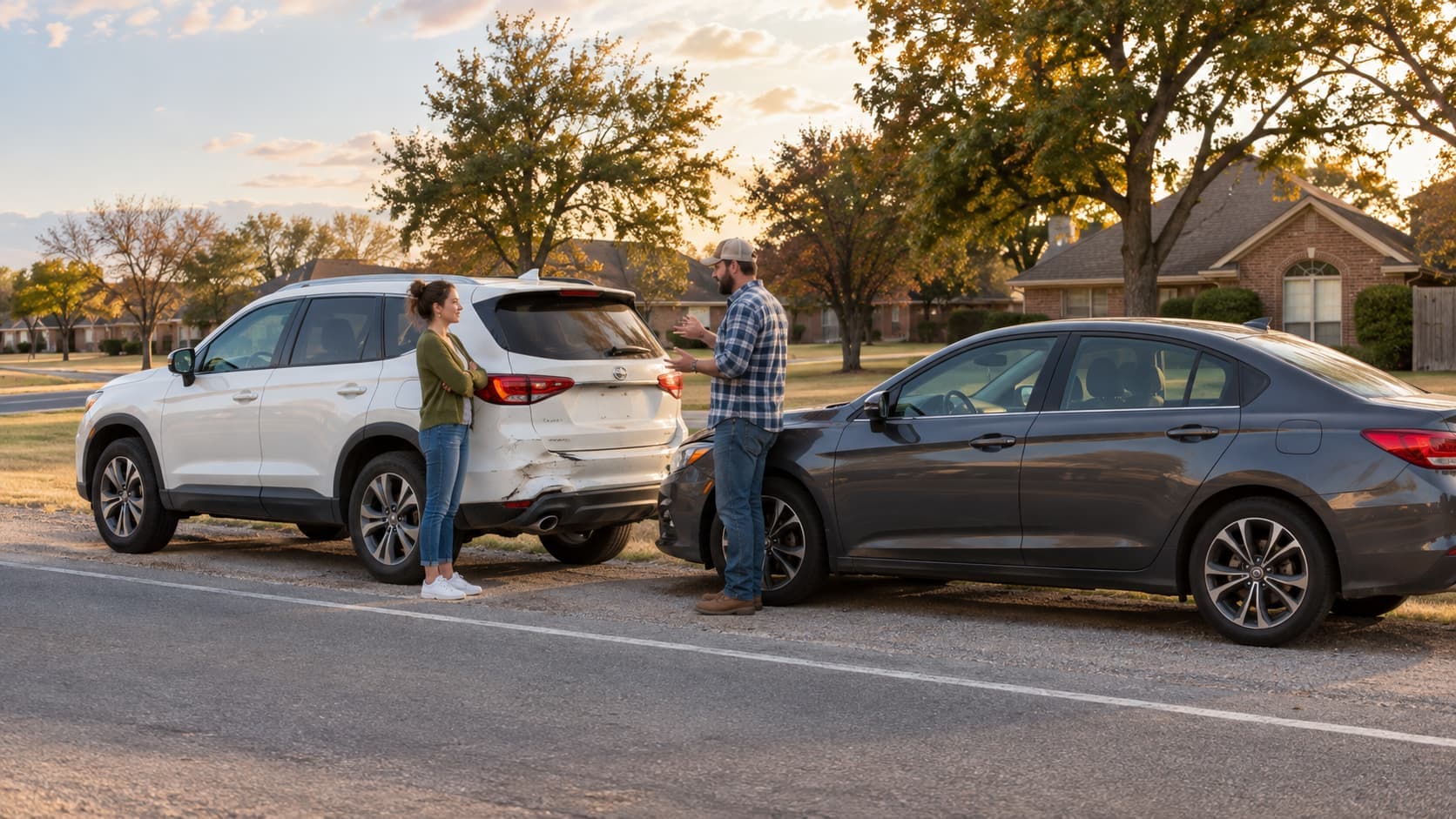
Full coverage car insurance can help pay for damage to your vehicle, even when another driver causes an accident. If you use your own collision coverage, though, a deductible may still apply.
The amount you pay depends on which insurance company handles the repairs. If the other driver’s insurance accepts responsibility, you may be able to have your vehicle repaired without using your collision coverage.
Depending on how the claim is resolved, you may also be able to recover some or all of your deductible.
Do You Pay a Deductible if You’re Not at Fault?
Yes, your collision deductible generally applies if you use your own insurance to pay for repairs, regardless of who caused the accident.
If the other driver’s liability insurance accepts responsibility and pays for the damage, your collision deductible typically won’t apply.
| How the Claim Is Handled | Does Your Collision Deductible Apply? |
| Your collision coverage pays for repairs | Generally, yes |
| The other driver’s liability insurance pays | Generally, no |
| Your insurer provides an applicable deductible waiver | May be waived |
Suppose another driver rear-ends your vehicle, causing $2,800 in covered repairs. You have a $500 collision deductible.
If your own insurance handles the claim, the insurer may pay $2,300 toward the repairs, leaving $500 as your responsibility.
The deductible applies because you’re using your collision coverage, even though the other driver caused the accident. The deductible you select for collision coverage determines the amount applied to an eligible claim.
What Happens if the Other Driver’s Insurance Pays for the Damage?
When another driver causes an accident, their property damage liability insurance may pay for repairs to your vehicle.
Once that insurer accepts responsibility and approves the covered claim, payment can be handled through the other driver’s policy. This generally allows you to avoid using your own collision coverage and paying its deductible.
The insurer must first confirm coverage, investigate the accident, and determine responsibility. If the claim is delayed or liability is disputed, your collision coverage may provide another option for handling repairs, subject to your deductible and policy terms.
You can file a claim with the responsible driver’s insurance company while also notifying your own insurer about the accident. This allows both companies to review the information and determine how the claim should be handled.
Can You Get Your Deductible Back After a Not-at-Fault Accident?
Yes. If another driver caused the accident, you may be able to recover some or all of your deductible through a process called subrogation.
When your collision insurance pays for repairs, your insurer may seek reimbursement from the responsible driver or their insurance company. If the recovery is successful, you may also receive reimbursement for the deductible you paid.
The amount returned depends on the circumstances of the accident and how much your insurer can recover. Some claims result in full deductible reimbursement, while others may result in partial repayment or no reimbursement.
If you use your own collision coverage after a not-at-fault accident, you can ask your insurer whether deductible recovery is being pursued and how you’ll be notified if money is recovered.
What if the Other Driver Is Uninsured or Disputes Fault?
Collision coverage can also help when the responsible driver has no liability insurance or their insurance company disputes responsibility.
If your vehicle has covered collision damage, you may be able to use your own policy to pay for repairs, subject to the collision deductible.
This gives you another option while responsibility is being investigated or when payment from the other driver is unavailable.
Your insurer may also pursue reimbursement from the responsible party, although recovering the deductible can be more difficult when the other driver is uninsured or fault remains disputed.
What to Know About Not-at-Fault Deductibles Before Buying Full Coverage
When comparing full coverage policies, the collision deductible is worth reviewing alongside the monthly price.
Three details can help you compare your options:
- Collision coverage: Confirm that the quote includes protection for covered damage to your vehicle after a collision, regardless of fault.
- Collision deductible: Check the amount that would apply if you used your own coverage to repair your vehicle.
- Deductible waivers: Ask whether the insurer offers any deductible waiver provisions for specific not-at-fault accidents and when those provisions apply.
Insurance companies may offer different deductible amounts and policy provisions, even when their quoted monthly prices are similar.
Reviewing these details when comparing full coverage car insurance in Oklahoma can help you choose a policy that fits your vehicle and budget.
Frequently Asked Questions
Does full coverage automatically waive your deductible if you’re not at fault?
Your collision deductible generally applies when you use your own insurance, regardless of fault. Some insurers offer deductible waivers for certain situations, depending on the policy terms.
Does the other driver admitting fault mean you won’t pay a deductible?
An admission of fault may help establish responsibility, but the insurance company still needs to evaluate the claim. If you use your own collision coverage, the deductible generally applies unless a waiver is available.
How long does it take to get a deductible reimbursed?
The timeline depends on the recovery process, the other driver’s responsibility, and the insurance companies involved. Reimbursement may be full or partial, depending on the amount recovered.
Review Your Full Coverage Options
Collision coverage can help pay for repairs even when another driver causes an accident. If you use your own insurance, your deductible may apply, but you could receive some or all of that money back if your insurer successfully recovers payment from the responsible party.
At Save Money Car Insurance, Oklahoma residents can compare full coverage options based on their vehicle, driving history, and coverage needs. You can get a personalized quote, review available deductibles, and find a policy that fits your budget.
Get started with a full coverage quote today.