
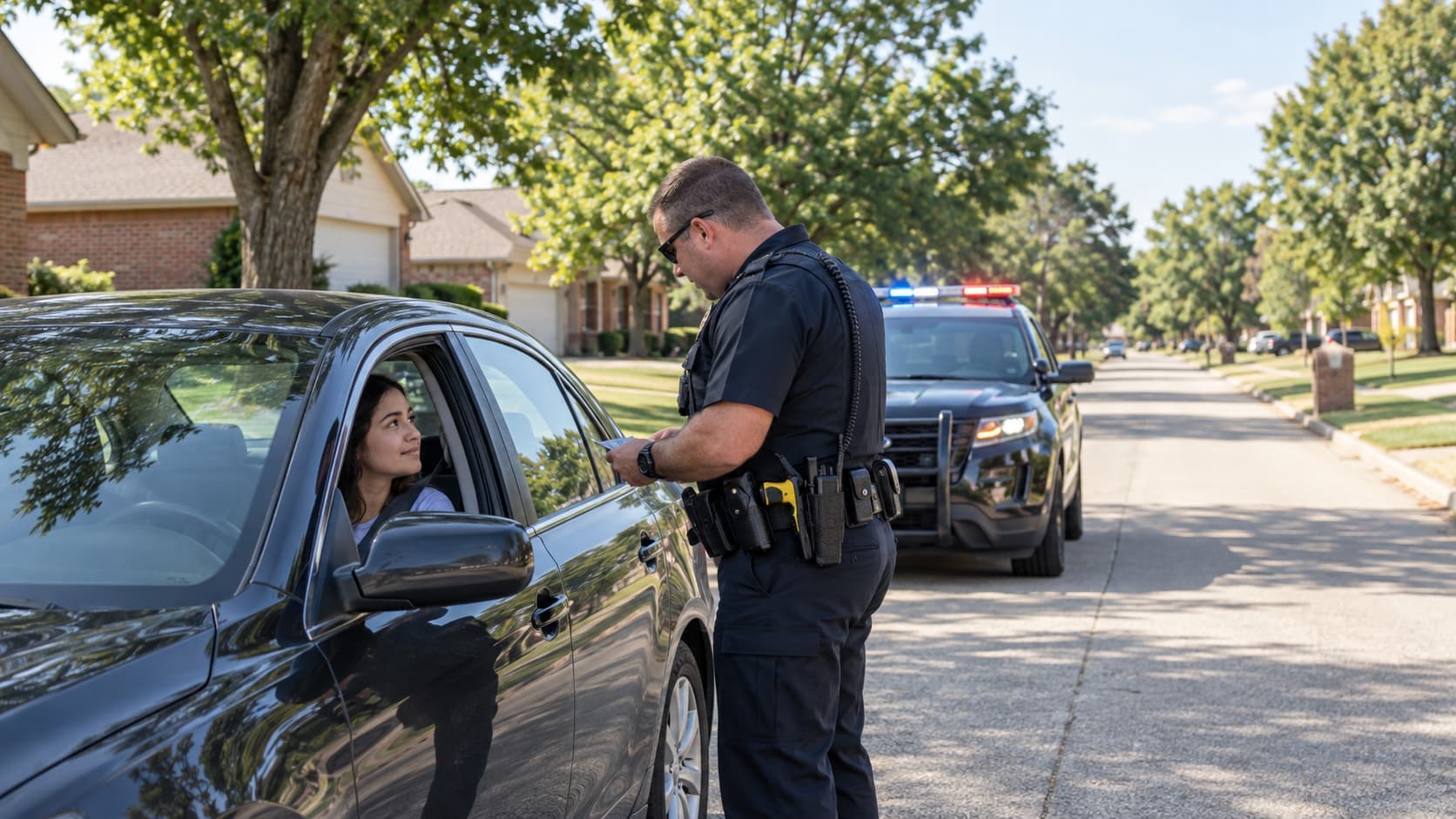
Oklahoma can electronically verify car insurance using vehicle and policy information, including license plate numbers. Tag offices, law enforcement officers, and the state’s uninsured vehicle enforcement program all use electronic verification, although each follows a different process.
This means your insurance status may be checked without someone relying solely on your insurance card. But what information is used, and what happens if the system doesn’t confirm your coverage?
Here’s how Oklahoma verifies car insurance in four different situations.
How Does Oklahoma’s Electronic Insurance Verification System Work?
Oklahoma uses the Oklahoma Insurance Verification System (OKIVS) to confirm whether vehicles have active liability insurance.
Authorized agencies use the system to request coverage information electronically. Depending on the type of verification, the request may involve insurance company details, a policy number, a vehicle identification number (VIN), or a license plate.
The method depends on who’s checking the insurance and why.
| Who Checks Insurance? | Information Used | When It’s Checked |
| Oklahoma tag offices | Insurance company and policy information | Vehicle registration and renewal |
| Law enforcement | Policy details, VIN, license plate, or other identifiers | Traffic stops and accident investigations |
| UVED license plate cameras | License plate information | Automated insurance enforcement checks |
| Vehicle owners | License plate and last four VIN digits | Checking their own coverage online |
4 Ways Oklahoma Verifies Car Insurance
1. Insurance Verification at Oklahoma Tag Offices
When registering a vehicle or renewing its registration, Oklahoma tag offices generally use the electronic verification system to confirm current liability insurance.
Vehicle owners typically provide information from their insurance documents, including:
- Insurance company name
- Policy number
- Vehicle information associated with the policy
The tag agent uses this information to request confirmation through the state’s online system.
Under Oklahoma’s insurance verification law, vehicles subject to electronic verification generally must have their coverage confirmed before registration can be processed, unless an authorized exception applies.
What if your insurance is active but the tag office can’t verify it?
A recently purchased policy may not yet be reflected in the system. Incorrect vehicle information or a reporting issue can also prevent electronic confirmation.
Consider someone who purchases liability insurance before registering a newly bought vehicle. They arrive at the tag office with an active policy, but the electronic check doesn’t confirm coverage.
The first step is to verify that the VIN, insurance company, policy number, and coverage dates are correct.
If the electronic system is unavailable or the required information cannot otherwise be obtained, Oklahoma law allows tag offices to follow an alternative verification procedure. In qualifying circumstances, verification from a licensed insurance producer or customer service representative may be accepted by email.
The tag agent can explain what documentation is needed for the specific transaction.
2. Insurance Verification During Police Traffic Stops
Oklahoma law enforcement officers can check car insurance electronically during traffic stops and accident investigations.
An officer may request your insurance verification form and use the information to confirm that the policy is valid.
If the insurance card isn’t available, the officer may use identifying details such as:
- License plate number
- Vehicle identification number (VIN)
- Registered owner’s name
This means police may be able to determine whether a vehicle has insurance by checking its license plate information.
However, a failed electronic verification doesn’t necessarily establish that the vehicle is uninsured. Officers may need to consider the available insurance documentation and other information.
Oklahoma law also specifies that checking insurance compliance through the electronic system cannot be the primary reason for stopping a vehicle.
3. Insurance Verification Through License Plate Cameras
Some insurance checks happen without a traditional traffic stop.
Oklahoma’s Uninsured Vehicle Enforcement Diversion (UVED) Program uses automated license plate cameras to identify vehicles that may be operating without required liability insurance.
According to the Oklahoma District Attorneys Council, the process works as follows:
- A camera captures a vehicle’s license plate.
- The plate information is compared against the Oklahoma Insurance Verification System.
- Plates associated with confirmed personal auto insurance are screened out.
- Images that aren’t confirmed are forwarded for additional review.
Vehicle owners believed to be operating without the required coverage may receive a UVED notice explaining how to respond.
Can you receive a UVED notice even if you’re insured?
Yes. The program acknowledges that reporting issues can occasionally result in an insured vehicle being flagged.
Receiving a notice doesn’t automatically establish that the vehicle was uninsured. Owners who believe the notice is incorrect should follow its instructions and contact their insurance company or agent for assistance.
4. Checking Your Insurance Status Online
Oklahoma vehicle owners can also check whether their insurance is recognized by the state’s electronic verification system.
The public lookup requires:
- Oklahoma license plate number
- Last four digits of the vehicle’s VIN
- Confirmation that you’re the vehicle owner or have authorization to check its insurance status
You can use the Oklahoma Insurance Verification System’s online vehicle lookup to check your vehicle’s status.
This can be helpful after purchasing a new policy, changing insurance companies, or experiencing a verification problem.
One important detail: A successful public lookup doesn’t automatically resolve an existing UVED notice. The notice must be addressed through the required UVED process, which may involve electronic confirmation from your insurance company or agent.
Why Would Oklahoma Be Unable to Verify Active Insurance?
Having an active insurance policy doesn’t always guarantee that every electronic verification attempt will return a confirmed result.
The official Oklahoma Insurance Verification System identifies several possible reasons, including:
- Recently purchased insurance: A newly issued policy may not have been reported to the system yet.
- Incorrect VIN: The vehicle identification number in the insurance records may differ from the registration information.
- Out-of-state coverage: A policy that isn’t rated for Oklahoma may not be confirmed.
- Certain commercial policies: Some commercial insurance information may not be reported through the same process used for personal auto policies.
These issues can affect electronic confirmation even when someone has insurance documentation.
The next step depends on where the verification problem occurred.
What Should You Do if Oklahoma Can’t Verify Your Insurance?
If the Tag Office Can’t Confirm Your Coverage
Start by reviewing the information on your insurance documents.
Make sure the vehicle’s VIN, policy number, insurance company, and effective dates are correct.
If the information matches, contact your insurer and explain that the tag office couldn’t verify your coverage electronically. Ask the tag agent what additional documentation or direct confirmation may be accepted under the applicable procedures.
If You Receive a UVED Notice
Review the notice and follow its response instructions.
If your policy was active on the date identified in the notice, contact your insurance company or agent and provide the notice number.
Your insurer or agent may need to submit a re-verification through OKIVS for the date in question.
Checking your current insurance status online is useful, but it does not replace responding to the official notice.
If Your Online Insurance Lookup Doesn’t Confirm Coverage
Compare the VIN and license plate details you entered with your registration documents.
If the information is correct, contact your insurer to check for a recently issued policy, incorrect vehicle information, or another reporting issue.
An unconfirmed electronic result and an inactive policy aren’t necessarily the same thing. Your insurer can confirm the actual coverage status and help determine what needs to be corrected.
Do You Still Need Your Insurance Card in Oklahoma?
Yes. Even with electronic insurance verification, you should keep proof of active coverage available during traffic stops, accidents, and vehicle registration, especially if the state’s system can’t immediately confirm your policy.
Oklahoma also accepts digital insurance cards, allowing you to show proof of car insurance on your phone instead of carrying a paper copy.
Get Liability Insurance Before Registering Your Vehicle
Having active liability insurance and accurate vehicle information can help make the registration and verification process easier.
Save Money Car Insurance offers liability car insurance in Oklahoma, with online quotes and same-day coverage available to eligible customers.
Once your policy begins, you can access your insurance ID cards through the customer portal or mobile app and keep your coverage information available when needed.
Start Your Liability Insurance Quote