
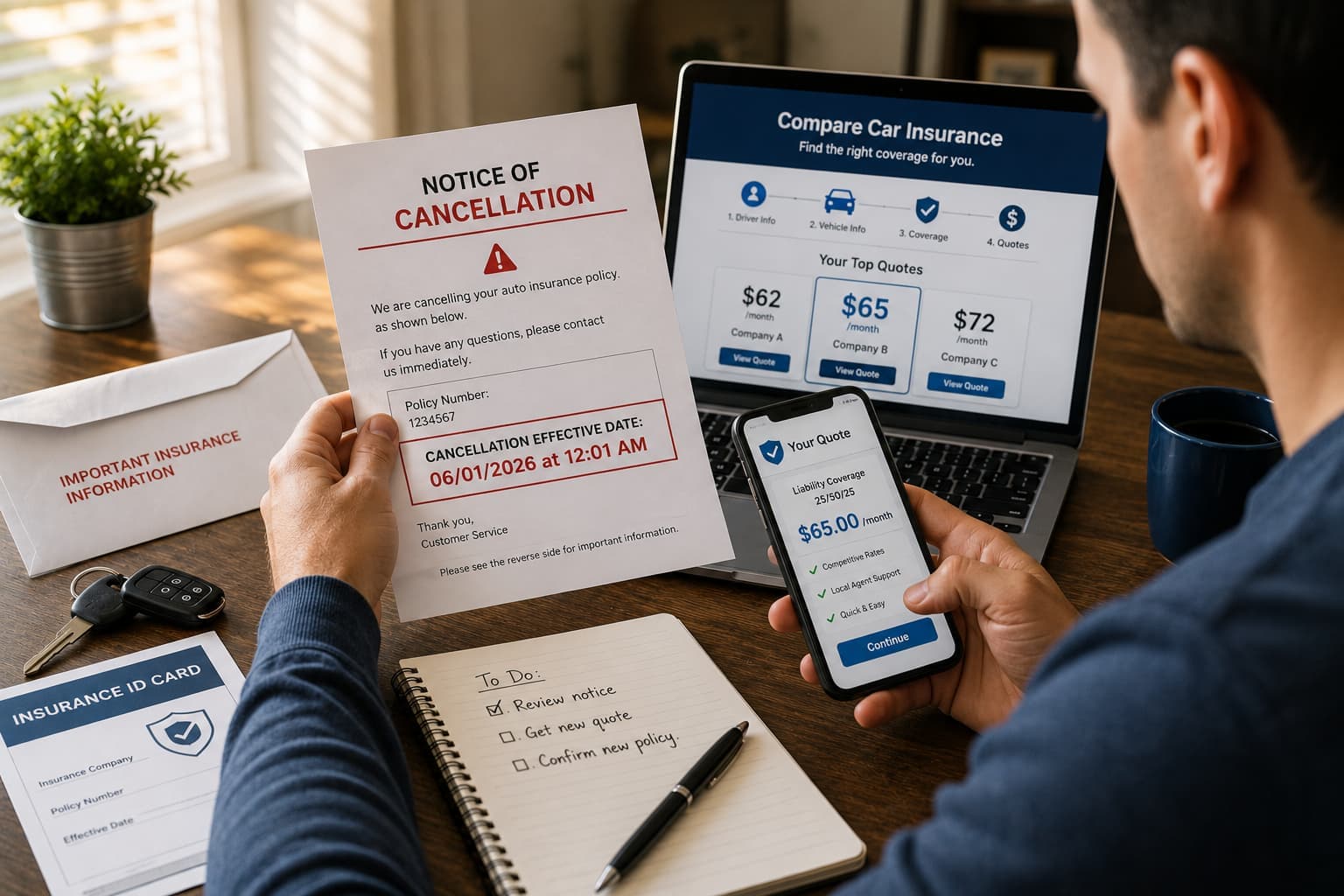
Abrir su buzón o su correo electrónico y ver un aviso de cancelación de seguro de auto puede ser estresante.
Su primer pensamiento probablemente sea: “¿Todavía tengo seguro?”
La buena noticia es que recibir un aviso de cancelación no siempre significa que su póliza ya terminó. En la mayoría de los casos, significa que su compañía de seguros le ha notificado que su cobertura está programada para terminar en una fecha específica, a menos que algo cambie.
Por eso la parte más importante del aviso no siempre es el motivo por el que se envió, sino la fecha y la hora en que está programado que termine su cobertura.
Ya sea que su aviso haya llegado de GEICO, Progressive, State Farm, Allstate u otra compañía de seguros, hay tres preguntas que debe responder en cuanto lo reciba:
- ¿Por qué se envió el aviso?
- ¿Todavía se puede resolver el problema?
- ¿En qué fecha y hora exactas terminará la póliza?
Una vez que tenga esas respuestas, tendrá una idea mucho más clara de lo que debe hacer a continuación.
Paso 1: Asegúrese de Saber Qué Aviso Recibió
No todos los avisos de seguro significan lo mismo.
Antes de tomar cualquier medida, lea con atención lo que dice realmente el documento.
Puede que haya recibido:
- Un recordatorio de facturación, que le informa que hay un pago pendiente.
- Un aviso de cancelación, que explica que su póliza actual está programada para terminar en una fecha específica.
- Un aviso de no renovación, que le informa que su compañía de seguros no planea renovar su póliza cuando termine el periodo actual.
La redacción del aviso importa mucho más que el asunto del correo electrónico o lo que diga el exterior del sobre.
Busque frases como:
- Cancelación efectiva
- Fecha de terminación de la póliza
- No renovación
- La cobertura termina
- Se requiere acción
- Comuníquese con nosotros antes del
Si no está seguro de lo que significa el aviso, comuníquese con su compañía de seguros usando el número de teléfono o el sitio web que aparece en los documentos de su póliza. Evite usar enlaces de pago desconocidos que lleguen por correo electrónico o mensaje de texto, a menos que haya confirmado que son legítimos.
Paso 2: Busque la Fecha de Cancelación Antes que Nada
Cuando las personas reciben un aviso de cancelación, es natural que se enfoquen en por qué ocurrió.
Aunque el motivo es importante, la fecha efectiva de cancelación normalmente es lo primero que debe buscar.
Esa fecha le indica cuánto tiempo tiene para resolver el problema o conseguir una cobertura de reemplazo antes de que termine su póliza actual.
Por ejemplo, imagine que un conductor de Oklahoma City recibe un aviso de cancelación porque no se hizo un pago.
Es fácil suponer que hacer el pago en algún momento antes de fin de mes resolverá el problema.
Pero no siempre es así.
El aviso puede indicar una fecha de cancelación mucho más próxima. Según los procedimientos de su compañía de seguros, también puede haber pasos adicionales necesarios antes de que su póliza pueda permanecer activa o ser reinstalada.
Por eso es importante hacer preguntas como:
- ¿Todavía se puede mantener activa esta póliza?
- ¿Hacer el pago evitará la cancelación?
- ¿Se requiere algo más de mi parte?
- ¿Cuándo sabré que mi póliza está activa de nuevo?
Cada compañía de seguros tiene sus propios procedimientos de facturación y reinstalación, así que las respuestas pueden variar de una compañía a otra.
Paso 3: Si Hace un Pago, Confirme Qué Sucede Después
Hacer un pago es un paso importante, pero no es el único.
Después de pagar, tómese unos minutos para confirmar exactamente qué pasó con su póliza.
Por ejemplo, pregúntele a su compañía de seguros:
- ¿Mi póliza está activa actualmente?
- ¿Se evitó la cancelación?
- ¿Hay alguna interrupción en mi cobertura?
- ¿Necesitan alguna información adicional de mi parte?
- ¿Cuándo estará disponible mi comprobante de seguro actualizado?
También es buena idea guardar su confirmación de pago, el recibo, el correo de confirmación o la tarjeta de identificación del seguro actualizada.
Esos documentos pueden ser útiles más adelante si necesita verificar cuándo se hizo el pago o cuándo entró en vigor su cobertura.
El objetivo no es simplemente hacer un pago, sino entender el estado de su póliza después de que el pago se haya procesado.
Paso 4: Si Su Póliza No Puede Continuar, Empiece a Buscar Cobertura de Reemplazo
A veces la póliza actual no puede continuar.
Si ese es el caso, la siguiente prioridad es asegurarse de que su póliza de reemplazo comience antes de que termine su cobertura actual.
Muchos conductores empiezan a buscar seguro en cuanto reciben un aviso de cancelación, que es exactamente lo que deben hacer.
Solo recuerde que obtener una cotización no es lo mismo que tener seguro.
Una cotización es simplemente un estimado.
La cobertura por lo general no comienza hasta que usted haya:
- Completado la solicitud.
- Hecho cualquier pago requerido.
- Recibido la confirmación de la compañía de seguros.
- Llegado a la fecha de entrada en vigor de la póliza.
Una de las formas más fáciles de crear un vacío de cobertura por accidente es suponer que la nueva póliza empieza de inmediato después de pedir una cotización.
Antes de dar por terminada la transición, verifique la fecha de entrada en vigor de su nueva póliza para saber exactamente cuándo comienza su cobertura.
Paso 5: Revise Dos Veces la Información de Su Nuevo Seguro
Una vez que haya comprado una nueva póliza, es tentador suponer que todo quedó listo.
Antes de guardar el aviso de cancelación, tómese un minuto para revisar la información de su nuevo seguro.
Asegúrese de que su póliza muestre:
- Su nombre correctamente.
- El vehículo correcto.
- La fecha de entrada en vigor correcta.
- La cobertura de responsabilidad civil que eligió.
- Su acreedor prendario, si su vehículo está financiado.
Verificar estos detalles solo toma unos momentos, pero corregir un error antes de necesitar usar su seguro es mucho más fácil que descubrirlo después.
Si su vehículo tiene un préstamo, este paso se vuelve aún más importante.
Aunque la ley de Oklahoma exige seguro de responsabilidad civil, su prestamista también puede exigir cobertura integral y de colisión como parte de su contrato de préstamo.
Una póliza que solo incluya responsabilidad civil puede cumplir con el requisito estatal de seguro y aun así quedarse corta frente a los requisitos de su prestamista.
Si no está seguro de lo que exige su préstamo, vale la pena confirmarlo con su prestamista en lugar de hacer suposiciones.
A Veces un Aviso de Cancelación Llega en el Peor Momento
Muchos conductores no piensan en su aviso de cancelación hasta que alguien les pide un comprobante de seguro.
Eso puede pasar mientras usted está:
- Comprando otro vehículo.
- Financiando un vehículo.
- Actualizando información con su prestamista.
- Registrando un vehículo.
- Agregando un conductor.
- Buscando una nueva póliza de seguro.
De repente, está tratando de resolver dos problemas a la vez: reemplazar su seguro y demostrar que tiene cobertura.
La forma más fácil de evitar esa situación es atender un paso a la vez.
Primero, averigüe si su póliza actual todavía puede mantenerse activa.
Si no puede, consiga una cobertura de reemplazo con la fecha de entrada en vigor correcta.
Luego revise los documentos de su nuevo seguro antes de compartirlos con una agencia de autos, un prestamista o una oficina de registro.
Tomarse unos minutos adicionales ahora puede ayudar a evitar retrasos después.
Guarde Su Aviso de Cancelación Hasta Que Todo Esté Resuelto
Después de haber reemplazado su póliza o resuelto el problema, no tire el aviso de cancelación de inmediato.
Guárdelo junto con:
- Su confirmación de pago, si hizo uno.
- Sus nuevas tarjetas de identificación del seguro.
- Su página de declaraciones, si está disponible.
- Cualquier correo de confirmación de su compañía de seguros.
Tener esos documentos juntos crea un registro claro de cuándo terminó una póliza y cuándo comenzó la siguiente.
Si más adelante un prestamista, una agencia de autos, una oficina de registro o incluso otra compañía de seguros tiene preguntas, usted tendrá la información a la mano.
La Fecha Es la Parte Más Importante del Aviso
Recibir un aviso de cancelación no siempre significa que ya perdió su cobertura de seguro.
Lo que sí significa es que usted tiene una fecha límite.
En cuanto reciba el aviso, tómese unos minutos para responder tres preguntas:
- ¿Por qué se envió el aviso?
- ¿Todavía se puede resolver el problema?
- ¿Cuándo termina realmente la póliza?
Esas respuestas le ayudarán a decidir qué hacer a continuación, ya sea hacer un pago, proporcionar información adicional o conseguir una cobertura de reemplazo antes de que termine su póliza actual.
Actuar a tiempo puede ayudarle a evitar estrés innecesario y, más importante aún, a evitar un vacío inesperado en su cobertura.