
La Primera Pregunta Sobre el Seguro No Es el Precio
Cuando alguien compra un vehículo nuevo, la primera pregunta sobre el seguro suele ser: ‘¿Cuánto va a costar?’ La primera pregunta más útil es: ‘¿Estoy agregando este vehículo, reemplazando otro o iniciando una póliza desde cero?’ La respuesta determina el siguiente paso.
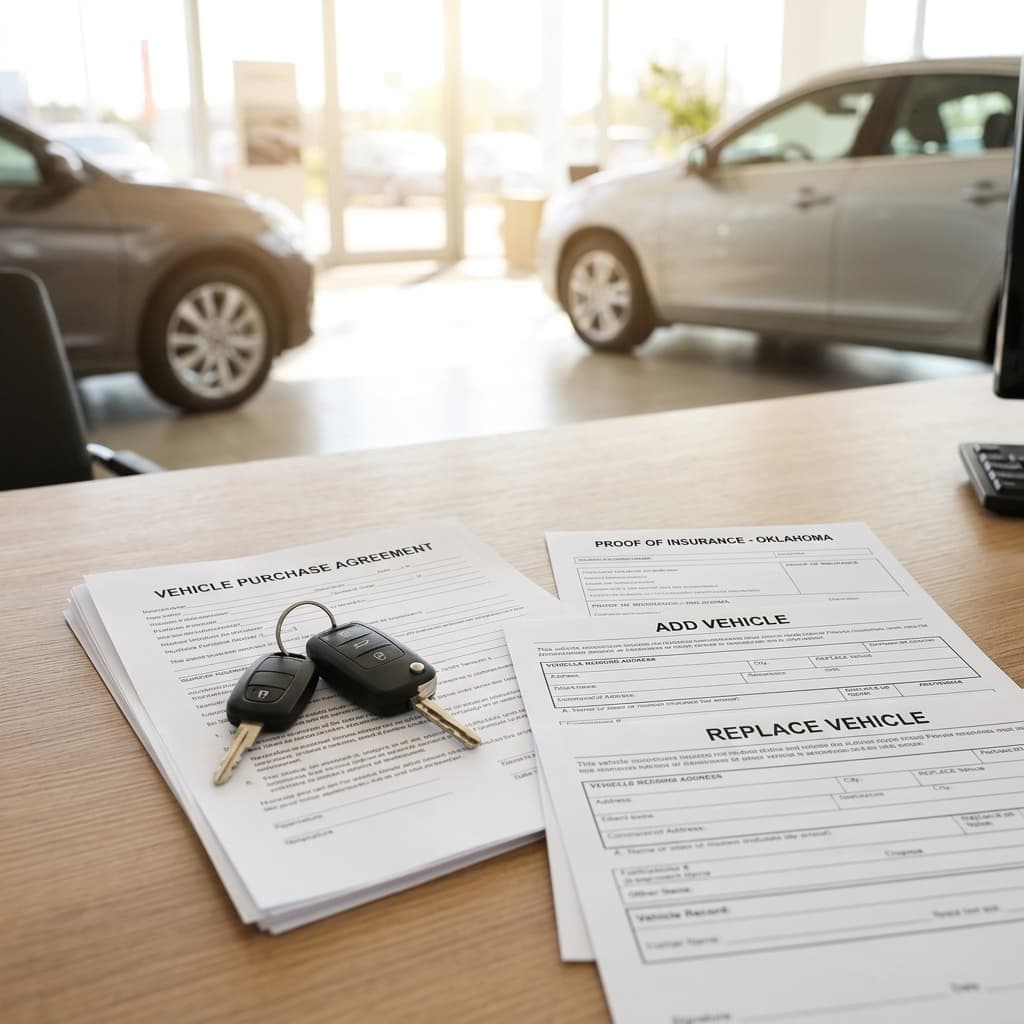
Un conductor de Oklahoma que entrega su auto viejo a cuenta puede necesitar únicamente reemplazar un vehículo registrado por otro. Un hogar que conserva el auto viejo y agrega el nuevo puede necesitar ambos vehículos en la póliza. Alguien que compra por primera vez o cuya póliza venció puede necesitar una póliza completamente nueva antes de que la agencia le entregue el vehículo.
Esos son trabajos de seguro distintos. Tratarlos igual es la razón por la que algunos conductores terminan con un comprobante que no coincide con lo que pide la agencia, con una póliza que sigue mostrando el auto equivocado o con la sorpresa de que el vehículo viejo sigue asegurado después de haberse vendido.
Si Está Reemplazando un Vehículo
Reemplazar un vehículo significa que un auto sale de la póliza y otro toma su lugar. La cotización debe identificar el vehículo viejo, el vehículo nuevo, el VIN, la fecha de entrada en vigor del cambio y si la cobertura debe quedarse igual o cambiar.
Esto es común cuando un conductor de Oklahoma entrega un auto a cuenta en una agencia. El auto viejo puede seguir apareciendo en la póliza actual hasta que se procese el reemplazo, y el auto nuevo puede necesitar un comprobante antes de que el comprador se pueda ir. Si el auto nuevo está financiado, el prestamista puede exigir cobertura integral y de colisión aunque el auto viejo solo tuviera responsabilidad civil.
Antes de cerrar el trato, el conductor debe saber si el auto viejo se entregó a cuenta, se vendió, se conservó o se declaró pérdida total. Eso evita que un segundo vehículo se quede por accidente en la póliza o que se quite demasiado pronto un vehículo que aún se necesita.
Si Está Agregando un Segundo Vehículo
Agregar un vehículo significa que el hogar ahora tiene más de un auto asegurado. Eso puede cambiar el precio, pero no siempre de la manera que los conductores esperan. Save Money Car Insurance ofrece un descuento por múltiples vehículos, así que agregar un segundo vehículo puede reducir el costo promedio por vehículo, aunque los ahorros no están garantizados.
Lo importante es que ambos vehículos aparezcan correctamente. Cada auto puede tener una cobertura distinta. Un vehículo ya pagado puede llevar solo responsabilidad civil, mientras que un vehículo más nuevo y financiado puede necesitar cobertura integral y de colisión. Un vehículo puede usarse para ir al trabajo, mientras que el otro se usa principalmente para hacer mandados. Esos detalles pueden cambiar la cotización.
Una situación común es la de una familia en Oklahoma que conserva un auto viejo ya pagado para un hijo adolescente o para el cónyuge mientras compra un vehículo más nuevo para el uso diario de trabajo. La póliza debe reflejar quién maneja qué, dónde se guardan los vehículos y qué cobertura le corresponde a cada auto.
Si Está Iniciando una Póliza Desde Cero
Empezar desde cero es distinto porque puede que no haya una cobertura existente que actualizar. El conductor necesita una póliza activa antes de depender de un comprobante de seguro. Eso importa en la agencia, durante los trámites de registro y en cualquier momento en que el conductor deba mostrar una cobertura de responsabilidad civil válida.
Tenga listos el VIN, el papeleo de compra, la información de su licencia de conducir, su dirección, la cobertura que desea y los datos del prestamista. Service Oklahoma señala que los vehículos recién comprados deben titularse y registrarse dentro del plazo requerido, así que tener documentos de seguro en orden puede ayudar a que el papeleo del vehículo avance sin problemas.
Si el vehículo está financiado y la cobertura completa resulta demasiado cara, el conductor no debe suponer que la responsabilidad civil solamente le bastará al prestamista. La responsabilidad civil puede cumplir con el requisito legal, pero el prestamista aun así puede exigir cobertura integral y de colisión u otro arreglo aprobado por él.
La Revisión Final Antes de Irse Manejando
Antes de irse con el vehículo, verifique que el comprobante de seguro muestre correctamente al asegurado nombrado, el vehículo, el VIN si está disponible, la fecha de entrada en vigor y el tipo de cobertura. Si hay un prestamista, verifique la información del acreedor prendario. Si el auto reemplazó a otro vehículo, confirme si el vehículo viejo sigue en la póliza o si ya fue retirado.
Esta revisión toma unos minutos y puede evitar varios dolores de cabeza: un retraso en la agencia, un aviso del prestamista, cargos duplicados por vehículo o un vacío de cobertura por haber cambiado el auto equivocado.
Preguntas Frecuentes
¿Debo agregar o reemplazar un auto en mi póliza de seguro?
Si va a conservar el vehículo viejo, está agregando un vehículo. Si el vehículo viejo se va a vender, entregar a cuenta o retirar, es posible que lo esté reemplazando. Dígale a la aseguradora exactamente qué está pasando.
¿Necesito cobertura completa en un vehículo recién financiado?
Un prestamista por lo general exige cobertura integral y de colisión en un vehículo financiado. La responsabilidad civil por sí sola puede cumplir con la ley estatal, pero no con el contrato de préstamo.
¿Puedo iniciar un seguro el mismo día que compro un auto?
Muchas veces sí, pero la póliza necesita tener correctos el conductor, el vehículo, la fecha de entrada en vigor, la cobertura y la información del prestamista antes de que usted dependa del comprobante.