
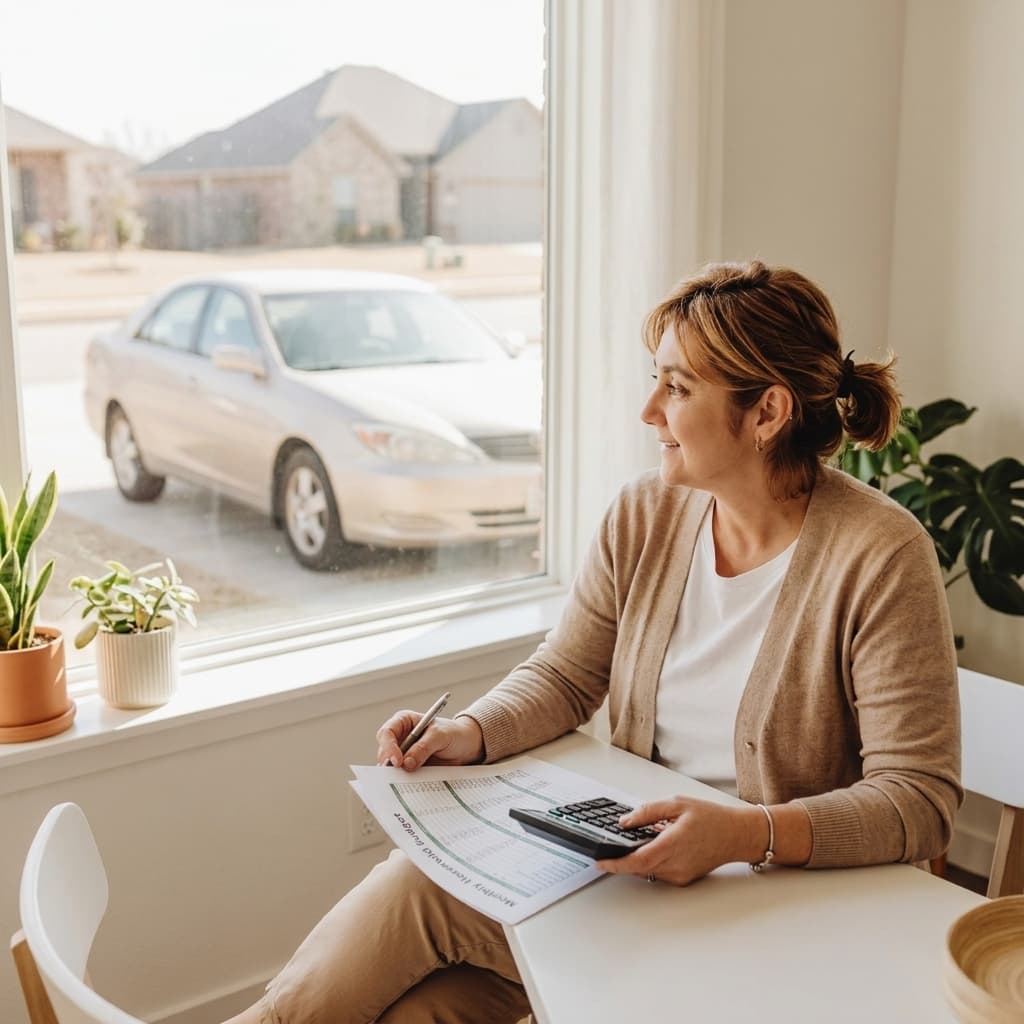
El Problema Silencioso del Presupuesto Después del Último Pago del Auto
Terminar de pagar un auto debería sentirse como un alivio. Para muchos conductores de Oklahoma City lo es – hasta que la factura del seguro sigue llegando cada mes y el presupuesto del hogar ya está comprometido con la renta, las medicinas, el mandado, los servicios y la gasolina. Esa es la verdadera búsqueda detrás del seguro de auto económico con un ingreso fijo. El conductor no está siendo descuidado. Está tratando de mantener legal, utilizable y accesible un vehículo ya pagado, sin generar después una cuenta de reparación que no podría afrontar.
Una vez que ya no hay prestamista, la decisión sobre el seguro cambia. El estado sigue exigiendo un seguro de responsabilidad civil, pero el prestamista ya no obliga a tener cobertura integral y de colisión. Eso le da al conductor espacio para hacerse una pregunta más útil: si reduzco esta póliza, ¿qué riesgo estoy aceptando asumir por mi cuenta?
Una situación común en Oklahoma City es la de un cliente que acaba de hacer el último pago de un sedán viejo y quiere que la factura del seguro baje igual que bajó el pago del auto. Otra es la de un conductor con ingresos por discapacidad que aún depende del auto para sus citas y los mandados familiares, pero no puede seguir pagando lo mismo por una cobertura completa. Esas no son preguntas abstractas sobre ahorros. Son decisiones mensuales de flujo de efectivo ligadas a si el hogar puede seguir funcionando.
Lo que el Prestamista Ya No Controla
Cuando un préstamo queda pagado, el acreedor prendario ya no puede exigir cobertura integral y de colisión como parte del contrato de préstamo. Eso no significa que esas coberturas sean inútiles. Significa que la decisión vuelve a manos del dueño. El Departamento de Seguros de Oklahoma explica que, si un préstamo queda pagado, el conductor debe comunicarse con su agente o compañía para que quiten al acreedor prendario de la póliza, y la compañía puede pedir un comprobante de que el préstamo fue liquidado.
Aquí es donde un vehículo ya pagado puede resultar más barato de asegurar. La cobertura de responsabilidad civil puede cumplir con el requisito legal de Oklahoma. La cobertura integral y la de colisión son las partes que protegen el auto del propio conductor después de un robo, granizo, vandalismo, incendio o choque. Quitar una o ambas puede bajar el pago, pero también cambia quién paga si el auto sufre daños.
Para un conductor con ingresos fijos, el objetivo no es quitar automáticamente toda cobertura opcional. El objetivo es dejar de pagar por una cobertura que ya no tiene sentido financiero, manteniendo la protección que sí corresponde al valor del auto y a la capacidad del hogar de recuperarse de una pérdida.
El Recorte que Ahorra Dinero Más Rápido También Puede Pasarle a Usted la Cuenta de la Reparación
La cobertura de solo responsabilidad civil suele ser la forma legal más barata de asegurar un auto ya pagado. Ayuda a pagar las lesiones o los daños materiales que usted les cause a otras personas, hasta los límites de la póliza. No repara su propio vehículo después de un choque en el que usted tuvo la culpa. Esa distinción es toda la decisión.
Si el auto es viejo, está pagado y vale menos que el costo de uno o dos años de prima de cobertura completa, la responsabilidad civil solamente puede ser una decisión razonable para el presupuesto. Si el auto es la única forma de llegar al trabajo, a las citas médicas, a recoger a los niños de la escuela o de atender responsabilidades de cuidado, la decisión es más difícil. Ahorrar en la prima puede ayudar este mes, pero un choque podría dejar al conductor sin transporte.
Por eso la pregunta útil con un ingreso fijo no es: ‘¿Cuál es la póliza más barata?’ Es: ‘Si quito esta cobertura, ¿podría afrontar el resultado?’ Un conductor que tiene otro vehículo en el hogar puede responder distinto que alguien cuyo auto pagado es su único transporte funcional.
La Cobertura Integral Puede Importar Más que la de Colisión en Algunos Autos Ya Pagados
Algunos conductores creen que las únicas opciones son cobertura completa o solo responsabilidad civil. En la práctica, la conversación puede ser más específica. La cobertura de colisión es la que está ligada a los daños de su propio auto en un choque. La cobertura integral es la que está ligada a pérdidas que no son choques, como robo, granizo, incendio, ramas que caen y vandalismo. El Departamento de Seguros de Oklahoma señala que la cobertura integral es la que se relaciona con robo, vandalismo, granizo, inundación, incendio y pérdidas similares.
En Oklahoma City, un auto ya pagado que se estaciona a la intemperie puede seguir enfrentando riesgo de granizo o robo, incluso si el dueño rara vez maneja largas distancias. Un conductor que no puede pagar tanto la cobertura integral como la de colisión tal vez quiera preguntar si es posible y conveniente conservar únicamente la cobertura integral en esa póliza. La disponibilidad y el precio de las coberturas varían según la compañía, así que esa es una pregunta que conviene hacer antes de suponer que la responsabilidad civil solamente es la única opción accesible.
Esta es una mejor conversación que simplemente recortar hasta que el precio se vea bien. Un hogar con ingresos fijos puede decidir que la cobertura de colisión es demasiado cara para un auto de bajo valor, pero aun así querer algo de protección contra pérdidas que no sean choques si la diferencia mensual es manejable.
Qué Revisar Antes de Reducir la Póliza
Antes de reducir la cobertura de un auto ya pagado, revise cuatro cosas: si ya quitaron al acreedor prendario, si el vehículo sigue apareciendo correctamente, qué deducibles aplican y qué dejará de pagar la póliza. La página de declaraciones es el lugar más fácil para empezar, porque muestra el vehículo cubierto, el acreedor prendario, los límites, los deducibles y los detalles de la prima.
Revise también la fecha de entrada en vigor de cualquier cambio. Un conductor que reduce su cobertura hoy debe entender cuándo aplica el cambio y qué pasa si ocurre un reclamo antes o después de esa fecha. Si otro miembro del hogar usa el auto, asegúrese de que la información de conductores registrados sea correcta antes de enfocarse únicamente en el precio.
Un seguro de auto económico con ingresos fijos funciona mejor cuando el conductor sabe exactamente qué cambió. El pago puede ser más bajo, pero la póliza debe seguir correspondiendo a la forma en que se usa el auto, al valor del vehículo y a la capacidad del hogar de absorber una pérdida.
Preguntas Frecuentes
¿Puedo quitar la cobertura completa después de terminar de pagar mi auto en Oklahoma?
Si el vehículo ya no está financiado ni arrendado, el prestamista por lo general ya no exige cobertura integral y de colisión. Usted todavía necesita seguro de responsabilidad civil para manejar legalmente, y debe decidir si quitar la cobertura de daños físicos tiene sentido según el valor del auto y su capacidad de pagar reparaciones.
¿La responsabilidad civil solamente es el seguro de auto más barato para un conductor con ingresos fijos?
Muchas veces es la opción legal más barata para un vehículo ya pagado, pero le devuelve a usted los costos de reparación o reemplazo de su propio auto después de un choque en el que tuvo la culpa.
¿Debo conservar la cobertura integral en un auto viejo ya pagado?
Puede valer la pena preguntarlo si un robo, granizo, incendio u otro daño que no sea por choque le representaría una dificultad económica. La respuesta correcta depende del valor del auto, la prima, el deducible y las opciones disponibles en la póliza.