
If the cost of insuring your financed car has become harder to fit into your budget, it makes sense to look at your options.
Maybe your premium went up. Maybe your monthly expenses changed. Or maybe the price that felt manageable when you bought the car no longer feels that way.
When full coverage is too expensive on a financed car, though, removing comprehensive and collision is not always as simple as asking the insurance company to take them off.
The reason is the loan.
Oklahoma requires liability insurance to operate a vehicle on the state’s roads, but a lender can have separate insurance requirements written into the financing agreement.
So if you’re financing a car in Tulsa and the insurance payment is becoming harder to manage, start by finding out exactly what your lender requires. Once you know that, you can compare the options that actually work with your loan.
Why Insurance on a Financed Car Is Different
When you own a car outright, you have more freedom to decide what coverage you want beyond Oklahoma’s liability requirement.
A financed car is different because you still owe money on it.
The vehicle serves as security for the loan, so financing agreements commonly require insurance that protects the car itself. If that required coverage ends, the lender may have the right under the contract to obtain coverage protecting its interest in the vehicle.
That is why there are really two questions to answer:
What insurance does Oklahoma require me to carry?
and
What insurance does my lender require me to carry?
They are not necessarily the same.
You might be able to get a liability quote from an insurance company, but that does not automatically mean liability-only coverage satisfies your auto loan.
Check with the lender before changing comprehensive or collision.
Start by Looking at What You Have Now
Before making phone calls, pull up your current policy.
You do not need to study every page. Just get a clear picture of what you are paying for now.
Look for:
- Your current premium
- Comprehensive coverage
- Collision coverage
- Your comprehensive and collision deductibles
- The lender listed on the policy
- Any other coverage included on the vehicle
This is also a good time to remember that “full coverage” is an informal term. People commonly use it to describe a policy that includes liability, comprehensive, and collision, but policies can still differ in important ways.
Instead of asking only, “How much is full coverage?” compare the actual coverage and deductibles on each quote.
That gives you a much better idea of what is changing along with the price.
If Full Coverage Is Too Expensive, Call the Lender Before Dropping It
This is probably the most important step in the entire process.
Tell the lender that the cost of your current insurance has become difficult to manage and that you want to understand the insurance requirements in your loan.
You can ask:
- Does my loan require comprehensive and collision?
- Are there minimum or maximum deductible requirements?
- Are there any other insurance arrangements the lender accepts?
- What happens if I remove comprehensive or collision?
- What proof of insurance does the lender need?
- If another arrangement is allowed, when does it need to become effective?
You are not asking the lender to choose your insurance company.
You are finding out what the loan contract will allow.
Once you have that answer, you know which insurance options are actually worth comparing.
What If the Lender Mentions CPI or Lender-Placed Insurance?
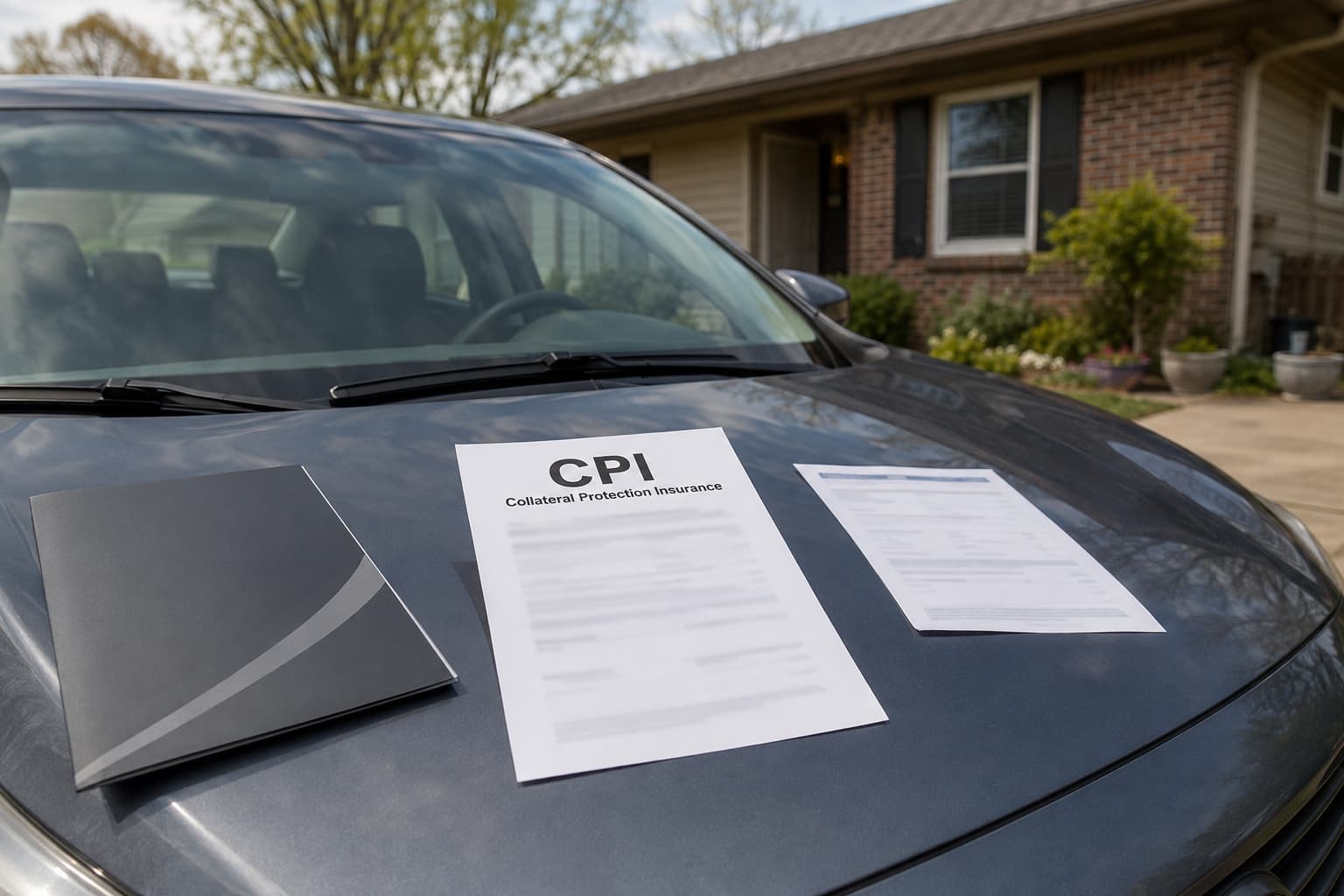
This is where terms like CPI, collateral protection insurance, or lender-placed insurance may come up.
Not every lender handles this the same way, and it should not be assumed that CPI is available as a voluntary alternative to your current insurance.
The basic idea is that a lender may obtain insurance to protect its interest in a financed vehicle if the borrower does not maintain the coverage required under the loan agreement. The Consumer Financial Protection Bureau explains that force-placed vehicle insurance generally protects the lender and the vehicle rather than providing the same protection as the borrower’s own auto policy. It can also cost more than insurance purchased independently.
That is why CPI should not be treated as another name for affordable full coverage.
If your lender brings it up, ask exactly what it means for your loan.
Find out:
- What does it cost?
- What does it cover?
- Who does it protect?
- Is there a deductible or other amount you would still owe?
- Would you still need your own Oklahoma liability policy?
- When would the lender’s coverage begin?
- How would you remove it later if you purchased acceptable coverage elsewhere?
Get the details before deciding whether the arrangement helps your budget.
Compare the Whole Monthly Cost, Not Just the Insurance Quote
Suppose your current insurance costs $300 per month and you find a liability policy for much less.
At first glance, the cheaper quote can look like the obvious choice.
But if your lender requires another product that adds a charge to your loan payment, you need to include that amount too.
Compare everything you would actually pay each month.
For example:
Current arrangement
Insurance payment: $300
Additional lender insurance charge: $0
Total: $300
Now imagine another arrangement the lender has specifically confirmed it will accept:
Separate liability policy: $120
Lender-related coverage: $140
Total: $260
In that example, the total monthly cost is lower.
But change the lender charge to $220 and the same arrangement now costs $340.
That is why the liability quote by itself does not tell you whether you are saving money.
And because lender-placed insurance can cost more than coverage purchased independently, you should never assume the lender option will be the cheaper one.
Compare the entire monthly obligation before making the change.
Make Sure You Understand What Each Policy Actually Covers
Price matters, especially when the reason you are making a change is affordability.
But you also want to know what you are buying.
A separate liability policy and a lender-related physical-damage product can serve different purposes.
Oklahoma liability insurance is the minimum level of insurance required to operate a vehicle on the state’s roads.
A lender-related product may be focused on protecting the lender’s financial interest in the financed car.
That does not automatically make the arrangement good or bad.
It simply means you should know what each piece does before comparing it with your current policy.
Ask both the lender and the insurance company to explain the coverage in plain language.
If something happens to the car, what would the lender’s coverage pay?
What would your liability policy pay?
What costs could still fall to you?
Those answers matter just as much as the monthly price.
What If the Lender Will Accept Separate Liability Coverage?
After speaking with the lender, you may learn that it accepts an arrangement where you maintain a separate Oklahoma liability policy alongside whatever protection the lender requires for the vehicle.
That decision has to come from the lender.
If the lender confirms that separate liability coverage works with the arrangement it accepts, Save Money Car Insurance can help you look at affordable Oklahoma liability coverage.
This is where shopping the liability portion separately can make sense.
You can compare the premium and payment options available to you, then put that number next to any amount the lender would charge.
The goal is not to assume one arrangement will always cost less.
It is to find out what the lender will accept and then compare the real numbers.
What If the Lender Says You Must Keep Comprehensive and Collision?
Then you still have options to explore without simply dropping the required coverage.
Start by comparing quotes.
Insurance companies can price the same driver and vehicle differently, so another insurer may offer a price that fits the budget better while still meeting the lender’s requirements.
Also compare the deductibles.
If your lender allows different deductible amounts, ask how changing them affects the premium and what you would have to pay yourself after a covered loss.
The important part is to compare policies using the same basic coverage setup.
A quote that looks dramatically cheaper is not especially useful if it leaves out something your lender requires.
What If You Receive a CPI or Insurance Verification Notice?
Sometimes the problem starts with a letter.
You might receive a notice saying the lender cannot verify the required insurance on the vehicle or that lender-placed coverage is being added.
That does not always mean you are actually uninsured.
There can be situations where you already have acceptable coverage but the lender does not have the information it needs to verify it.
The CFPB notes that lenders may require written evidence of insurance when confirming that coverage meets the loan contract.
If you already have the required coverage, contact the lender and ask exactly what proof it needs.
That might include your declarations page or other insurance documentation showing the vehicle, coverage, and lienholder.
Then confirm that the lender received it and connected it to the correct loan.
Do that before assuming you need to buy something new.
Do Not Cancel Your Current Coverage Too Early
Once you find a less expensive arrangement, it can be tempting to cancel the old policy immediately.
Make sure the replacement pieces are ready first.
If the lender has approved another arrangement, confirm:
- When the lender-approved protection starts
- When your new liability policy starts
- When the old coverage can end
- What proof the lender needs
- What documents you should keep
A quote is only a price until the policy becomes effective.
The goal is to move from one accepted arrangement to another without accidentally leaving a gap.
If you are still making payments on the car, keep the lender involved until the change is complete.
Full Coverage Too Expensive on a Financed Car? Start With Your Options
If your car insurance is becoming difficult to afford, looking for another solution makes sense.
You may find a less expensive policy that still meets the lender’s requirements.
You may learn that changing deductibles helps.
Your lender may explain another arrangement available under your particular loan.
Or you may find that keeping comprehensive and collision and shopping for a better price is still the most practical choice.
What matters is knowing what the loan requires before changing the policy.
Start with the lender. Get the requirements. Then compare the insurance prices and any lender-related costs side by side.
If your lender confirms that separate liability insurance works with the arrangement it accepts, Save Money Car Insurance can help you compare affordable Oklahoma liability coverage and payment options.
The goal is simple: find an insurance setup you can manage while keeping the coverage arrangement in line with your loan.
Frequently Asked Questions
Can I have liability insurance on a financed car in Oklahoma?
Yes, an insurance company can offer liability coverage on a financed car, but your lender may require comprehensive and collision coverage as part of the loan agreement.
Oklahoma’s insurance requirement and your lender’s insurance requirement are separate. Before removing comprehensive or collision from a financed vehicle, check your loan agreement or ask the lender what coverage must remain in place.
What should I do if full coverage is too expensive on my financed car?
If full coverage is too expensive on a financed car, start by asking your lender exactly what insurance the loan requires. Then compare insurance quotes that meet those requirements.
You can also ask whether the lender allows different deductibles or another approved insurance arrangement. Compare the total monthly cost of every option before changing your current policy.
Can my lender require full coverage on a financed car?
Yes. A lender can require comprehensive and collision coverage on a financed car because the vehicle is collateral for the loan.
The exact coverage and deductible requirements are set by the financing agreement. Check your loan documents or contact the lender before reducing coverage.
What is CPI on a financed car?
CPI stands for collateral protection insurance. It is insurance connected to an auto loan that is primarily intended to protect the lender’s financial interest in the financed vehicle.
A lender may add CPI or another lender-placed insurance product when required vehicle coverage is not maintained or cannot be verified. CPI is not necessarily the same as a personal auto insurance policy, and its cost and coverage vary by lender.
Can I switch insurance companies on a financed car?
Yes. You can generally switch insurance companies while a car is financed as long as the new policy meets the lender’s insurance requirements.
Before canceling the old policy, make sure the replacement policy is active and that the lender receives any required proof of insurance. This helps avoid a coverage gap or a lender notice that required insurance cannot be verified.
What if my lender says it cannot verify my insurance?
Contact the lender and ask what documentation it needs. If you already have acceptable insurance, you may simply need to provide proof showing the coverage and lienholder information.
Confirm that the lender received the documents and applied them to the correct loan account before making additional insurance changes.