
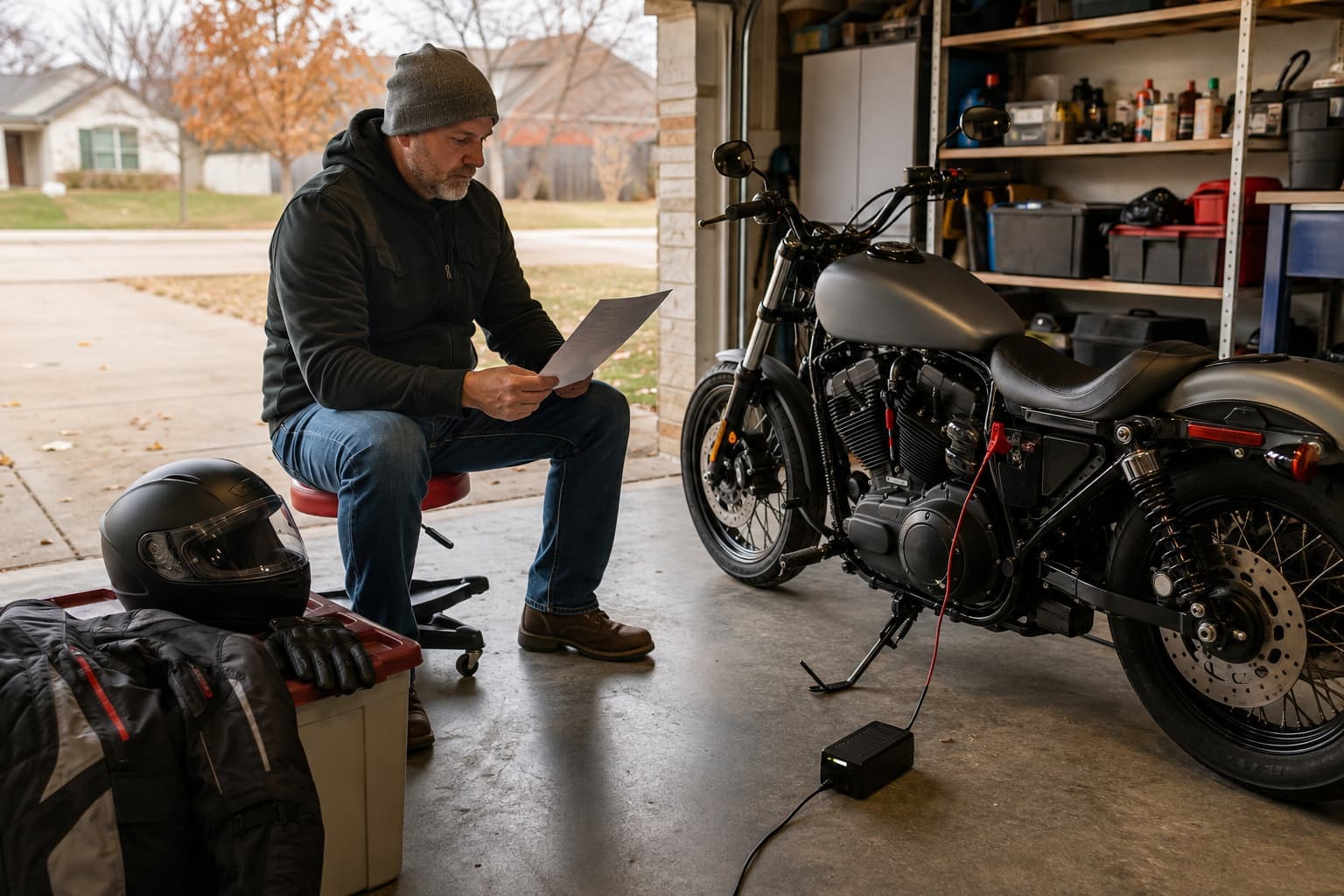
If your motorcycle spends most of the winter sitting in the garage, you might start wondering what that means for your insurance.
Winter usually means less time on the road, but your motorcycle still has value while it is parked.
Theft, fire, vandalism, hail, and other damage can still happen during storage. Comprehensive coverage is commonly associated with non-collision losses like these, depending on the policy and deductible.
If the bike is financed, your lender may also have insurance requirements that continue through the winter.
So before making a change simply because you are riding less, start with a few practical questions:
- Is the motorcycle paid off or financed?
- Where will it spend the winter?
- Is there a chance you will ride it before spring?
Those answers can help you figure out what makes sense for the months when your motorcycle is spending more time parked.
What Changes When Your Motorcycle Is Stored for Winter?
Putting your motorcycle away for winter changes how you use it.
Maybe you normally ride several times a week, but once December arrives the bike barely leaves the garage. You are no longer putting the same miles on it or spending as much time in traffic.
The motorcycle itself is still there, though.
That is the part worth thinking about when reviewing motorcycle insurance for winter storage in Oklahoma.
Different parts of a motorcycle policy serve different purposes. Liability coverage deals with your responsibility to other people when you are operating the bike. Oklahoma requires liability insurance to operate a motorcycle.
Coverage for the motorcycle itself is a separate consideration.
Before changing anything for winter, think about what you would still want your insurance to help with if something happened while the bike was parked.
A Paid-Off Motorcycle Gives You More Flexibility
Imagine your motorcycle is paid off and will spend most of December, January, and February inside a locked garage.
You have no loan payment and no lender setting insurance requirements.
That gives you more freedom to look at the motorcycle’s value and decide how much protection you want to keep.
A useful question is:
If something happened to the motorcycle while it was stored, could I comfortably handle the cost myself?
Maybe the bike is worth enough that replacing it after a theft would be difficult. Maybe you have invested in accessories or upgrades. Or maybe the motorcycle is older and you are comfortable taking on more of the financial risk yourself.
There is no need to make the decision based only on the fact that you are riding less.
Think about what the motorcycle is worth to you and what you would want your policy to do if it were damaged while sitting in the garage.
A Financed Motorcycle Needs a Little More Attention
A financed motorcycle is different because the lender still has a financial interest in the bike.
Parking it for winter does not change the balance you owe.
Financing agreements commonly require coverage that protects the financed vehicle. If required insurance lapses, the lender may be able to purchase coverage protecting its own interest and charge the borrower for it.
Before changing comprehensive or collision coverage on a financed motorcycle, check your loan agreement or contact the lender.
Ask:
- What coverage needs to remain in place?
- Are there deductible requirements?
- Does storing the motorcycle change anything?
- What happens if required coverage is removed?
Once you know what the loan requires, it becomes much easier to talk with your insurance company about your winter plans.
Your Motorcycle Can Still Be Damaged While It Is Parked
A bike does not have to be moving for something to happen to it.
Maybe it spends the entire winter untouched in the garage. There is still a possibility of theft, fire, vandalism, hail, falling objects, or other damage.
Comprehensive coverage is generally the part of an auto or motorcycle policy associated with non-collision losses such as theft, fire, vandalism, and certain types of weather damage.
That does not mean every rider needs to make the same coverage decision.
Instead, think about your own motorcycle.
How much is it worth?
Where will it be stored?
How comfortable would you be paying for repairs or replacing it yourself?
Those questions are more useful than focusing only on how many miles you expect to ride during winter.
Where Will the Motorcycle Spend the Winter?
The phrase “winter storage” can describe several very different setups.
One motorcycle might sit inside a locked attached garage.
Another may stay in a detached building.
Someone else might use a storage unit or keep the bike under a covered area beside the house.
Take a minute to look at your actual setup.
- Is the motorcycle protected from weather?
- Is the area locked?
- Who has access to it?
- Will anyone move the bike during winter?
- Is it staying at your normal address?
- Are there any rules in a storage agreement?
If the motorcycle will be kept somewhere different for several months, let your insurance company know where it will be stored.
This is also a good time to take a few photos.
Photograph the overall condition of the bike along with any accessories or upgrades you would want documented. Keep the keys, title, registration, and insurance information somewhere secure.
It is a simple step, and it gives you a clear record of the motorcycle’s condition before storage.
What If Oklahoma Gives You a Warm Winter Day?
You can have every intention of leaving the motorcycle parked until spring.
Then Oklahoma gives you one of those unexpectedly nice winter afternoons.
The sun is out. The roads are dry. And suddenly the bike does not feel quite so “stored.”
Think about how realistic that possibility is before changing your insurance.
If you enjoy taking the motorcycle out whenever the weather cooperates, keeping your policy active throughout the year may fit your routine better.
Oklahoma requires liability insurance when you operate a motorcycle. If you made changes while the bike was stored, make sure the coverage you need is actually effective before riding again.
There is nothing wrong with deciding that keeping the motorcycle insured throughout the winter is simply easier.
For riders who use their bikes occasionally year-round, it can mean one less thing to think about every time the temperature climbs.
Should You Cancel Motorcycle Insurance Just Because You Are Riding Less?
Riding less does not automatically mean canceling the policy is the best choice.
Before making that decision, think through what your winter will actually look like.
Maybe the motorcycle truly will not move for three months.
Maybe you will take it out twice.
Maybe it is financed.
Maybe it is paid off but still worth enough that you would want protection if it were stolen or damaged.
Or maybe you simply prefer knowing that your insurance stays in place throughout the year.
The right question is not:
“Am I riding enough to keep insurance?”
A better question is:
“What do I still want protected while the motorcycle is parked?”
Once you know that, you can have a much more useful conversation about your policy.
Keeping Motorcycle Insurance Year-Round Can Be Simple
You do not have to treat motorcycle insurance like something that gets turned on and off with the seasons.
Keeping the policy active throughout the year can make sense if:
- You occasionally ride during winter
- Your riding season changes with the weather
- The motorcycle is financed
- You want protection for the bike while it is stored
- You prefer not to make coverage changes every winter and spring
Paying monthly can also make year-round coverage easier to work into your regular budget.
Instead of thinking about motorcycle insurance as one large seasonal cost, you can treat it like another monthly expense and keep the policy in place as the way you use the motorcycle changes throughout the year.
For someone who might ride in January, park the bike through February, and be back on the road regularly in March, that simplicity can be valuable.
Three Things to Check Before Parking the Bike
You do not need a long winter insurance checklist.
Come back to three things.
1. Is the Motorcycle Financed?
If you still owe money on the bike, check the loan requirements before changing coverage.
If it is paid off, you have more flexibility to decide how much protection you want to keep.
2. Where Will It Be Stored?
Look at the actual location.
A motorcycle inside a locked garage is in a different situation from one sitting somewhere exposed to weather or easier access.
Think about the bike’s value and what you would want covered while it sits there.
3. Will You Really Leave It Parked Until Spring?
This one is easy to underestimate.
If you know you are going to take the bike out whenever Oklahoma gives you a nice afternoon, build that into your insurance decision.
Your winter setup should fit the way you actually use the motorcycle.
When Spring Comes Back
After a few months in storage, getting the motorcycle itself ready usually gets most of the attention.
You check the battery.
Look at the tires.
Test the lights.
Check the brakes.
Find your helmet and riding gear.
Insurance deserves a quick check too.
If you made any coverage changes during winter, confirm that everything you need for riding is active before heading back onto the road.
If you kept the motorcycle insured throughout the winter, there may be less to do. It is still worth checking that your proof of insurance and policy information are current before you start riding regularly again.
Adding insurance to your spring checklist takes only a minute.
Winter Storage Does Not Have to Make Motorcycle Insurance Complicated
If your motorcycle spends most of winter in the garage, it makes sense to think about what you need from your insurance during those months.
You do not have to make the decision based only on how often you are riding.
A paid-off motorcycle gives you one set of choices. A financed motorcycle gives you another.
A bike that stays parked until spring is different from one that comes out whenever Oklahoma gets a warm weekend.
Start with your actual situation.
Think about what the motorcycle is worth, where it will be stored, what the lender requires, and how likely you are to ride before spring.
Then choose an insurance setup that fits the way you really use your bike.
If keeping things consistent sounds easier than changing your insurance every winter and spring, a year-round policy can give you one less thing to think about when the weather changes.
Frequently Asked Questions
Do I need motorcycle insurance during winter in Oklahoma?
If you plan to operate the motorcycle, Oklahoma requires liability insurance.
If the bike will remain parked, think about your financing requirements and what protection you want to keep for the motorcycle itself.
Can I cancel motorcycle insurance if I am not riding?
Talk with your insurer about the options available under your policy before canceling. Consider the value of the motorcycle, where it will be stored, any lender requirements, and the possibility that you may ride before spring.
Keeping the policy active year-round is also an option.
What happens if my motorcycle is stolen while it is stored?
Theft of the insured motorcycle is generally associated with comprehensive coverage, subject to the policy’s terms, limits, exclusions, and deductible.
Review your policy before making winter coverage changes if theft during storage is something you want protected.
Can I change coverage on a financed motorcycle during winter?
Check your loan agreement or contact your lender first. Financing agreements commonly require insurance protecting the financed vehicle, so changing required coverage can affect the loan.