
Getting the call that your stolen car has been found can bring a lot of relief. But before you head out to pick it up, there are a few things to sort out.
The vehicle may be at an impound lot, towing facility, repair shop, or recovery location. It may also have damage that is not immediately visible. Even if it looks drivable, the ignition, wiring, steering, wheels, or other parts may have been affected.
Finding the vehicle does not automatically close the insurance claim. Contact your insurance company, confirm that police have released the car, and ask whether it needs to be inspected before it is moved or repaired.
Here is what Tulsa drivers can expect next.
Find Out Where the Car Is Being Held
Start by asking Tulsa Police where the vehicle was taken and whether it has been released.
A recovered car could be:
- At the location where officers found it
- At a police impound lot
- At a towing facility
- At a repair shop
- Temporarily held as part of the investigation
Ask:
- Has the car been released?
- Where is it located?
- What documents are needed to retrieve it?
- Who is authorized to pick it up?
- Are towing or storage charges accumulating?
- Does anything still need to be collected as evidence?
Do not arrange repairs or move the vehicle before confirming that police have released it.
If you need to contact Tulsa Police about a non-emergency matter, the department lists its non-emergency number as 918-596-9222. The appropriate contact may depend on where and how the car was recovered.
Tell the Insurance Company That the Vehicle Was Recovered
If you already opened a theft claim, contact the claim representative and provide the existing claim number.
Let the representative know:
- Where the vehicle was found
- Where it is currently being held
- Whether police have released it
- Whether it appears damaged
- Whether parts or belongings appear to be missing
- Whether towing or storage charges are adding up
- Whether you currently have a rental vehicle
Ask what should happen before the car is moved. The insurer may want photographs, an inspection, a repair estimate, or transportation to a specific facility.
If you had not opened a claim before the recovery, explain both the original theft and the recovery. The insurer can tell you what information it needs to begin reviewing the loss.
Do Not Assume the Car Is Safe to Drive
A recovered vehicle can look normal from several feet away while still having damage that makes it unsafe or unreliable.
The thief may have damaged:
- The ignition
- Steering column
- Door locks
- Windows
- Wiring
- Wheels or tires
- Suspension
- Exhaust system
- Catalytic converter
- Airbags or electronic modules
- Keys or key programming
The vehicle may also have been involved in a crash, driven over curbs, or operated without proper fluids.
If you are uncertain about its condition, ask about having it towed. Driving the car before it is inspected could create a safety concern or make it harder to separate theft-related damage from damage that happened afterward.
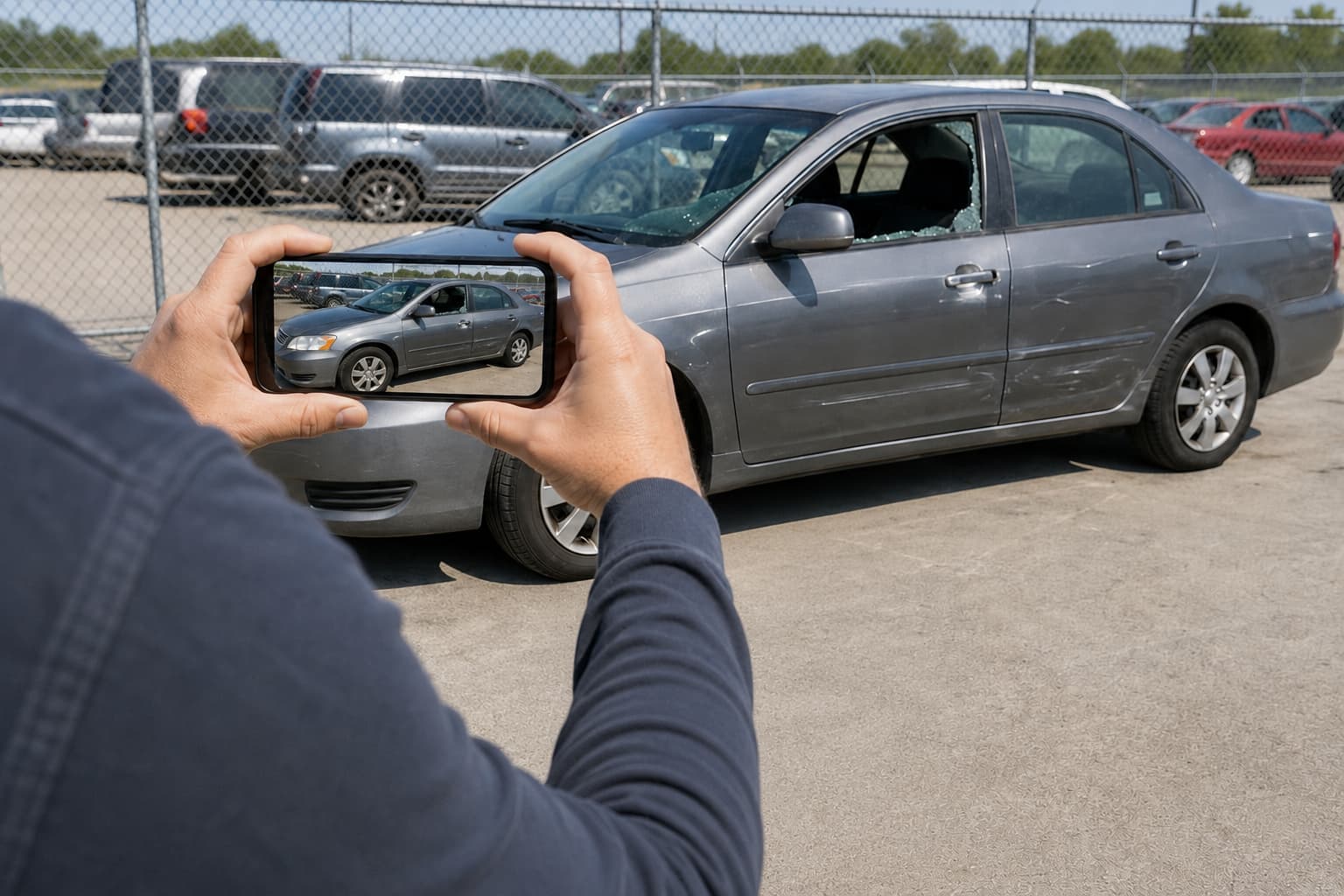
Photograph the Vehicle Before Cleanup or Repairs
Once police allow access, document the vehicle’s condition before anything is cleaned, removed, or repaired.
Take photographs of:
- All four sides of the car
- Interior and cargo areas
- Windows and door locks
- Ignition and steering column
- Dashboard warning lights
- Wheels and tires
- Visible body damage
- Missing factory-installed parts
- Debris left inside
- Odometer and fuel level, when accessible
A slow video walking around the vehicle can help capture details that are easy to miss in individual photographs.
Avoid touching unfamiliar items, drug paraphernalia, weapons, or anything police may consider evidence. Ask law enforcement how those items should be handled.
Separate Vehicle Damage From Missing Belongings
Make three separate lists:
Damage to the vehicle
This may include broken glass, damaged locks, scratched paint, body damage, cut wiring, or a torn steering column.
Parts missing from the vehicle
This may include the catalytic converter, wheels, battery, factory stereo, airbags, sensors, or electronic modules.
Personal property missing from the vehicle
This may include a laptop, tools, backpack, clothing, phone, or other loose belongings.
The distinction matters because the same policy may not handle every part of the loss.
Comprehensive coverage is commonly associated with theft-related damage to the insured vehicle and factory-installed parts, subject to the policy and deductible. Loose belongings generally are not covered by an auto policy. Renters or homeowners insurance may be relevant to personal property, depending on the policy, limits, and deductible.
Give the insurer a complete list, but keep the vehicle damage and personal property organized separately.
Does Comprehensive Coverage Still Apply After Recovery?
Recovery does not automatically end a comprehensive theft claim.
If comprehensive coverage was active when the car was stolen, it may help with covered damage caused during the theft, attempted theft, or recovery period. The insurance company will review the policy and facts to determine what applies.
Possible covered damage could include:
- Broken windows or locks
- Ignition and steering-column damage
- Vandalism
- Missing attached parts
- Damage from a crash or improper use
- Other theft-related vehicle damage
The comprehensive deductible generally applies to a covered theft claim.
Liability-only insurance generally does not pay to repair the insured vehicle after theft or attempted theft. It is still important to report the recovery and ask the insurer to confirm the available coverage rather than assuming what the claim will or will not include.
The Car Still Needs an Inspection
Once the vehicle is released, the insurer may arrange an inspection or ask for a repair estimate.
The process commonly includes:
- Documenting the vehicle’s condition
- Identifying missing parts
- Preparing a repair estimate
- Reviewing which damage relates to the theft
- Applying the appropriate deductible
- Comparing repair costs with the vehicle’s value
The insurer may decide that the vehicle can be repaired. If the damage is extensive, it may move into a total-loss evaluation.
A repair shop may also find additional damage after work begins. In that situation, the shop may prepare a supplemental estimate for the insurer to review.
Avoid authorizing non-emergency repairs until you understand the insurer’s inspection requirements. Emergency steps to prevent additional damage may be handled differently, so ask the claim representative what to do.
What If the Thief Crashed the Car?
A stolen vehicle may be recovered after striking another car, curb, fence, pole, or building.
Tell the insurance company if police reported a collision or if the vehicle has damage consistent with one. Provide:
- Police report or recovery number
- Photographs
- Towing information
- Known details about the collision
- Information about damaged property, if available
The insurer will determine how the policy applies to damage involving the recovered car and any third-party property.
Do not accept responsibility or promise payment to another party on your own. Give the available information to the insurer and allow the claim process to address it.
Who Pays the Towing and Storage Charges?
A recovered vehicle may begin accumulating towing or storage charges before the owner knows where it is.
Whether insurance pays those expenses depends on the policy, claim, circumstances, and insurer instructions. Contact the claims representative promptly and ask:
- Are towing charges covered?
- Are storage charges covered?
- Is there a limit?
- Should the vehicle be moved to another facility?
- Has transportation already been arranged?
- Who is authorized to release the vehicle?
Do not assume every day of storage will be covered. Once the car is released and can be moved, delays may create additional charges.
Save every towing, impound, and storage invoice.
What Happens to Your Rental Car?
If rental reimbursement is helping pay for temporary transportation, ask whether the vehicle’s recovery changes the rental authorization.
The answer may depend on:
- Whether the recovered car is drivable
- When the insurer can inspect it
- Whether covered repairs are approved
- The current rental return date
- How much rental reimbursement remains
- The policy’s daily and total limits
Recovery does not necessarily mean the rental must be returned that same moment. It also does not guarantee that rental reimbursement continues until every repair is finished.
Ask the claim representative for the approved return date and confirm any extension with the rental company. If repairs take longer than expected, insurance can contribute only within the applicable rental reimbursement limits.
What If Insurance Already Paid the Theft Claim?
A stolen vehicle may be found after the insurer has completed a total-loss settlement.
If that happens, contact the insurance company immediately.
Do not assume that you still own the vehicle or have authority to retrieve, sell, move, or repair it. Ownership may have transferred under the settlement documents.
Ask the insurer:
- Who currently owns the recovered vehicle?
- Who should contact the towing facility?
- Who is responsible for retrieving it?
- What should happen to the keys?
- Does any paperwork need to be updated?
- Is any additional claim information required?
Follow the insurer’s instructions before taking action.
Keep a Recovery Folder
Save all records connected to the recovery:
- Original theft report
- Police recovery number
- Vehicle release paperwork
- Location where the car was found
- Photographs and video
- Towing invoices
- Storage invoices
- Repair estimates
- List of missing parts
- List of missing belongings
- Claim correspondence
- Rental authorization
- Settlement documents, when applicable
These records can help everyone work from the same information as the claim moves forward.
What to Do After Your Stolen Car Is Found
Use this checklist:
- Confirm where the vehicle is being held.
- Ask whether police have released it.
- Notify the insurance company.
- Ask whether an inspection is required.
- Arrange towing if the vehicle’s condition is uncertain.
- Photograph it before cleanup or repairs.
- List vehicle damage, missing parts, and missing belongings separately.
- Save towing and storage invoices.
- Confirm the rental return date.
- Follow the insurer’s instructions before authorizing repairs.
If the vehicle has not yet been located, the first 24 hours after a car is stolen involve a different set of priorities, beginning with reporting the theft to Tulsa Police.
Finding the Car Does Not Automatically End the Claim
A recovered vehicle may need more than a ride home. It may need police release, towing, photographs, an insurance inspection, repairs, and a review of missing parts.
Contact the claim representative as soon as you receive the recovery notice. That conversation can help coordinate the vehicle’s release, control towing and storage costs, preserve the claim documentation, and clarify what happens to any rental vehicle.
Save Money Car Insurance can help customers locate their policy information and understand the coverage listed on their documents. The insurance company handling the claim determines coverage and payment based on the policy and facts of the loss.
Frequently Asked Questions
Does finding my stolen car end the insurance claim?
No. The vehicle may still need to be inspected for theft-related damage, missing parts, vandalism, or collision damage. Contact the claim representative and provide the recovery information.
Can I drive my recovered car home?
Only if police have released it and it is safe to operate. Because theft can damage the ignition, wiring, steering, wheels, or other components, ask whether towing or an inspection is appropriate before driving.
Does comprehensive insurance cover damage caused by a thief?
Comprehensive coverage may address covered theft-related damage to the insured vehicle, subject to the policy, deductible, and claim investigation.
Who pays towing and storage after a stolen car is recovered?
Coverage depends on the policy and circumstances. Contact the claim representative promptly, ask what expenses may be covered, and find out whether the vehicle should be moved.
What happens if the car is found after insurance has paid me?
Contact the insurer immediately. Ownership may have transferred under the total-loss settlement, so do not retrieve, sell, or repair the vehicle until the insurer provides instructions.
How long can I keep my rental after the vehicle is recovered?
The approved period depends on whether the recovered vehicle is drivable, the repair process, insurer authorization, and the remaining rental reimbursement limit. Confirm the return date with both the insurer and rental company.