
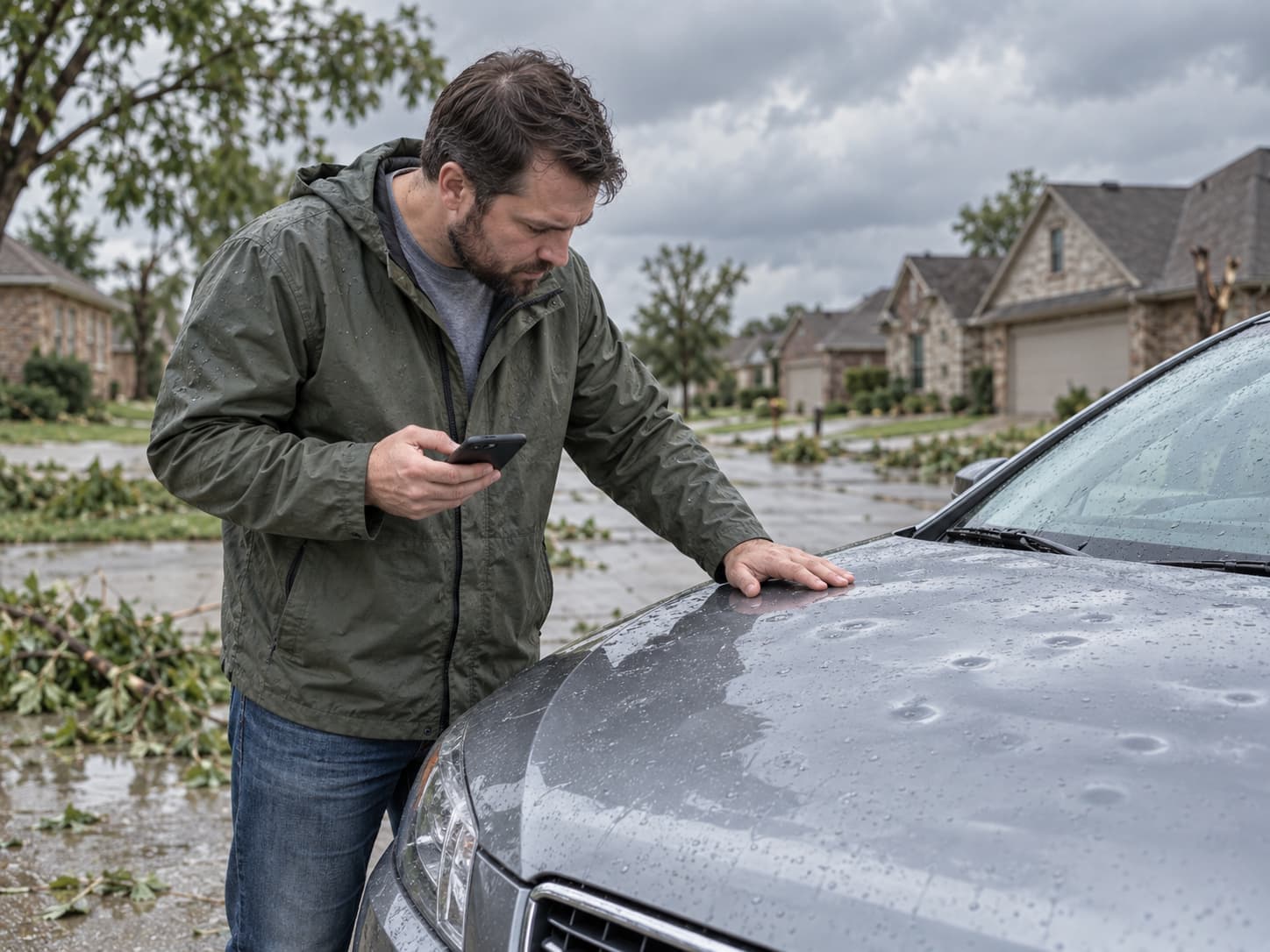
You walk outside after an Oklahoma storm and find hail dents across your hood, a broken windshield, or a tree branch lying across your car.
Which part of your car insurance would cover the damage?
In many of these situations, the answer is comprehensive coverage.
Comprehensive car insurance helps pay for certain types of damage to your vehicle that are not caused by a typical collision. That can include hail, wind, flooding, falling objects, theft, vandalism, fire, broken glass, and contact with an animal.
It is sometimes called other than collision coverage and is commonly included as part of full coverage, along with liability and collision coverage.
When Does Comprehensive Coverage Apply?
Comprehensive coverage is designed for covered losses that happen outside of a typical crash with another vehicle or object.
That makes it especially relevant after severe weather, but weather is only one part of what comprehensive can cover.
| What happened? | Coverage that may apply |
| Hail dents your parked car | Comprehensive |
| A tree branch falls on your vehicle | Comprehensive |
| Floodwater damages the vehicle | Comprehensive |
| Your car is stolen | Comprehensive |
| Someone vandalizes your car | Comprehensive |
| A rock cracks your windshield | Comprehensive may apply |
| You hit a deer | Comprehensive |
| You hit another vehicle | Collision generally applies |
| You lose control and hit a guardrail | Collision generally applies |
What matters most is how the vehicle was damaged.
For example, a storm may be happening in both situations, but hail falling directly onto your car and losing control on a wet road are handled differently.
Does Comprehensive Cover Oklahoma Weather Damage?
Comprehensive may cover several types of vehicle damage caused directly by severe weather.
That can include:
- Hail
- Strong wind
- Flooding
- Lightning
- Falling trees or branches
- Wind-blown debris
- Tornado debris
- Broken vehicle glass caused by a covered event
Severe weather damage is not just a general concern in Oklahoma. The National Weather Service Norman historical weather records include hail and strong-wind reports for central and western Oklahoma dating back to 1992, along with Oklahoma tornado records and information about significant weather events.
Recent events show why knowing what coverage applies can matter. On March 10, 2026, the NOAA Storm Events Database recorded 2.5-inch hail near Warr Acres in Oklahoma County during a storm system that also produced large hail and a tornado around the Oklahoma City metro.
If a vehicle was sitting outside when that hail fell, comprehensive coverage may apply to covered hail damage. Liability coverage, by itself, would not pay to repair hail damage to your own vehicle.
How the damage happens still matters.
Consider two vehicles affected by the same Oklahoma thunderstorm.
One is parked in a driveway when hail damages the hood and roof. Comprehensive may apply.
The other hydroplanes during heavy rain and hits a guardrail. Even though weather contributed to the accident, the physical damage resulted from a collision with an object, so collision coverage would generally be the coverage involved.
Hail, tornado debris, wind, flooding, and other types of weather damage can each affect a vehicle differently, so the cause of the damage is one of the first things to look at.
What Else Does Comprehensive Car Insurance Cover?
Comprehensive is not only weather coverage.
It can also protect your vehicle against several other types of covered losses that can happen when you are not involved in a traditional crash.
Theft
If your insured vehicle is stolen, comprehensive coverage may apply.
It may also cover certain damage caused during a theft or attempted theft, such as damage to the vehicle itself.
Personal belongings left inside the vehicle are different. Comprehensive car insurance generally protects the vehicle rather than items such as a phone, laptop, bag, or other personal property.
Vandalism
Comprehensive may cover intentional damage to your vehicle caused by someone else.
Examples can include:
- Keyed paint
- Broken vehicle glass
- Damage during a break-in
- Other intentional damage to the insured vehicle
The exact coverage depends on the circumstances and policy.
Falling Objects
A vehicle can be damaged even when it has not moved.
If a tree limb, storm debris, or another covered falling object lands on the vehicle, comprehensive may apply.
This is common after strong winds and storms, but falling-object claims are not limited to severe weather.
Fire
Comprehensive may cover vehicle damage caused by fire when the loss falls within the policy’s coverage.
The insurer will review what caused the fire and the resulting damage when determining how the claim is handled.
Broken Glass
A cracked windshield or other damaged vehicle glass may fall under comprehensive coverage when the damage is caused by a covered event.
A rock striking the windshield while you are driving is one common example.
How glass coverage and deductibles work can vary by policy.
Hitting a Deer or Another Animal
Animal strikes are generally handled under comprehensive coverage.
For example, if a deer runs into the road and you hit it, comprehensive would normally be the coverage involved.
That is different from hitting another vehicle, pole, fence, or guardrail, which would generally fall under collision coverage.
What Doesn’t Comprehensive Insurance Cover?
Comprehensive covers many unexpected events, but it does not cover every type of vehicle damage.
It generally does not cover:
- Crashes with another vehicle
- Hitting a pole, guardrail, fence, or building
- Normal wear and tear
- Routine maintenance
- Mechanical breakdown
- Damage that existed before coverage began
- Medical expenses
- Damage you cause to another person’s vehicle or property
- Personal belongings stolen from the vehicle
- Optional coverages that were not selected
Another part of the auto policy may apply to some of these situations.
For example, collision coverage may apply to damage to your vehicle after a crash, while property damage liability may apply to covered damage you cause to someone else’s vehicle.
Comprehensive vs. Collision After Severe Weather
Weather can make comprehensive and collision confusing because both types of damage can happen during the same storm.
A simple way to think about it is to look at what physically damaged the car.
Hail falls onto the car: comprehensive may apply.
A tree falls onto the car: comprehensive may apply.
Floodwater enters the car: comprehensive may apply.
The driver loses control in heavy rain and hits a pole: collision generally applies.
Wind pushes the vehicle into another object while it is being driven: the details of the loss would need to be reviewed to determine which coverage applies.
Comprehensive generally handles covered damage caused by events other than a collision. Collision generally handles damage caused when the vehicle crashes into another vehicle or object or is damaged in a covered rollover.
Does Comprehensive Insurance Have a Deductible?
Yes. Comprehensive coverage normally has its own deductible.
The deductible is the amount applied to a covered claim before the insurance payment is calculated.
For example:
Covered hail damage: $3,000
Comprehensive deductible: $500
Remaining covered amount: $2,500
The final payment still depends on the insurer’s evaluation of the loss and the policy terms.
Comprehensive and collision can also have different deductibles.
For example, you might have:
- $500 comprehensive deductible
- $1,000 collision deductible
That’s one reason to look beyond the monthly price when comparing full coverage policies. Two policies may both include comprehensive coverage but leave you responsible for different amounts after a covered claim.
Understanding how deductibles work can make those differences easier to compare.
How Do You Know If Your Car Has Comprehensive Coverage?
Check the declarations page for your auto policy.
Comprehensive may appear as:
Comprehensive
or
Other Than Collision
The declarations page should also show the deductible that applies to the vehicle.
Do not assume every vehicle on the same policy has identical coverage. One vehicle can have comprehensive and collision while another vehicle on the policy may carry different coverage.
Save Money Car Insurance customers can access their insurance documents, including their declarations page, through the customer portal or mobile app.
That can help you confirm what coverage is currently listed on the vehicle before you need to use it.
Is Comprehensive Part of Full Coverage?
Yes.
What people commonly call full coverage usually combines:
- Liability
- Collision
- Comprehensive
Each part has a different job.
Liability addresses covered injuries and property damage you cause to other people.
Collision addresses certain crash-related damage to your vehicle.
Comprehensive addresses certain damage to your vehicle caused by events other than a collision.
Full coverage does not mean every possible loss or expense is automatically covered.
What Happens If Your Car Is Damaged After a Storm?
If severe weather has already damaged your vehicle, start by identifying what happened.
Was the vehicle hit by hail?
Did floodwater enter it?
Did a tree fall onto it?
Or did you lose control while driving and collide with something?
That information helps determine which coverage may apply.
If comprehensive applies, the insurer will generally:
- Review what caused the damage.
- Inspect or document the damage.
- Determine whether the loss is covered.
- Apply the comprehensive deductible.
- Calculate the covered repair or total-loss payment.
If the vehicle can be repaired, the claim may help pay eligible repair costs.
If the damage is severe enough for the vehicle to be considered a total loss, the insurer will evaluate the vehicle’s value before the loss.
Full coverage does not automatically mean the remaining balance on a car loan will be paid in full. The vehicle’s value and the amount owed on the loan are separate.
Frequently Asked Questions
Does comprehensive insurance cover hail damage?
Yes. Comprehensive generally covers vehicle damage caused directly by hail when the loss is covered under the policy.
Does comprehensive cover tornado damage?
It may. Damage caused directly by wind, falling objects, or tornado debris may fall under comprehensive coverage. How the vehicle was damaged matters.
Does comprehensive cover flooding?
Comprehensive may cover vehicle damage caused by flooding or rising water when the loss is covered under the policy.
Does comprehensive cover a tree falling on my car?
Yes. Damage caused by a falling tree or branch will generally fall under comprehensive coverage.
Does comprehensive cover theft?
Comprehensive may cover the theft of the insured vehicle and certain covered damage caused during a theft or attempted theft.
Does comprehensive cover a cracked windshield?
It may. Windshield damage caused by rocks, hail, falling objects, or another covered event may fall under comprehensive coverage.
Does comprehensive cover hitting a deer?
Yes. Hitting a deer or another animal is generally handled under comprehensive coverage rather than collision coverage.
Is comprehensive insurance the same as full coverage?
No. Comprehensive is one type of coverage. Full coverage commonly combines liability, collision, and comprehensive coverage.
What to Remember About Comprehensive Coverage
Severe weather is one of the clearest examples of when comprehensive coverage may come into play in Oklahoma, but the coverage goes beyond storms.
It can also apply to covered losses involving theft, vandalism, fire, falling objects, glass damage, and animal strikes.
When something damages your vehicle, start with one question:
What caused the damage?
That answer is often the first step in figuring out which part of the policy may apply.