
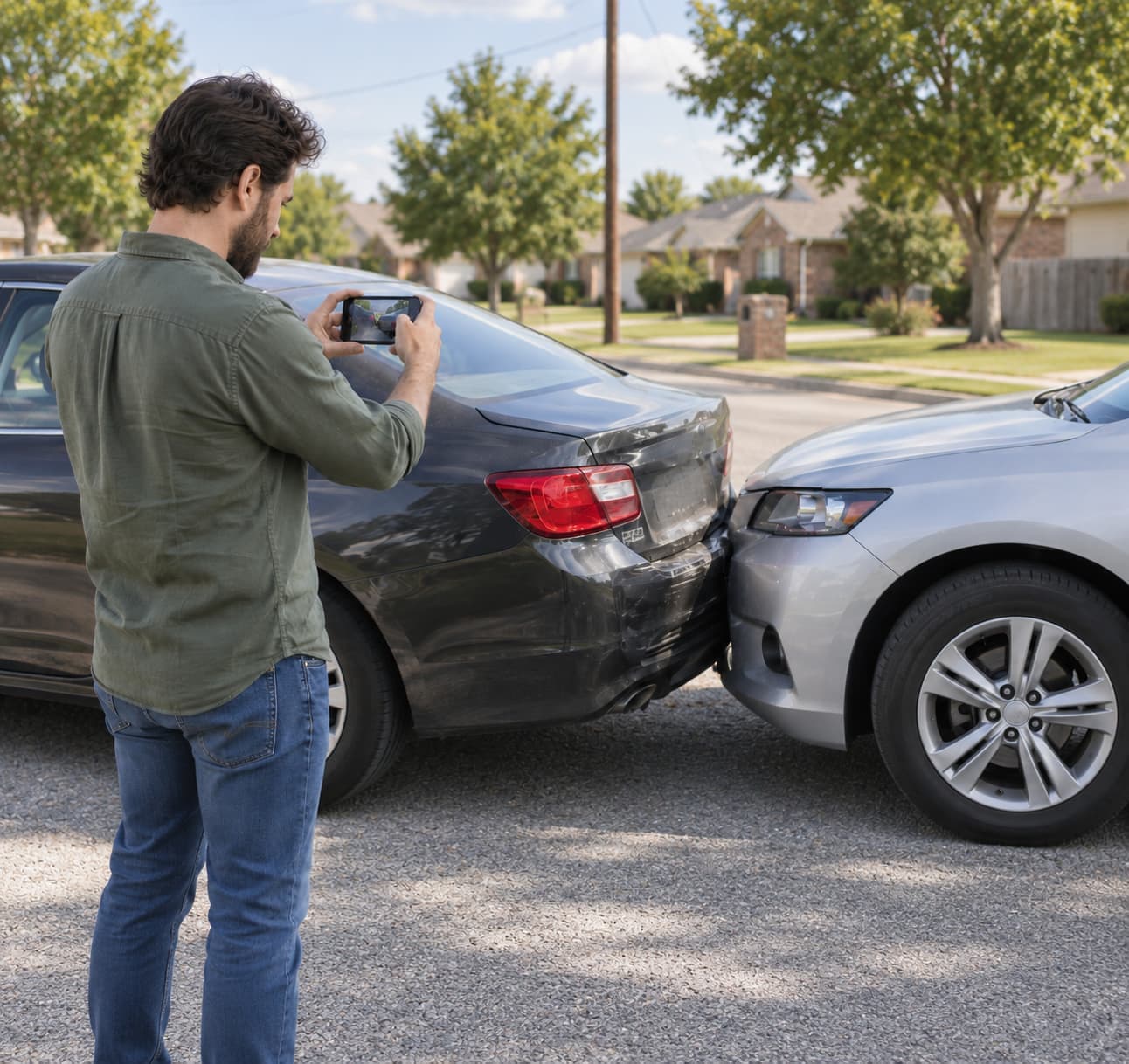
Getting into an accident while you have non-owner insurance works a little differently from having a policy written for a car you own.
A non-owner policy is primarily liability coverage. If you cause a covered accident while driving an eligible vehicle you don’t own, it may help pay for injuries or property damage you cause to other people, up to your policy limits.
What it generally does not do is pay to repair the vehicle you’re driving.
Non-owner car insurance in Oklahoma is designed around liability rather than physical-damage coverage for a particular vehicle. If an accident happens, here’s what to expect.
What Can Your Non-Owner Policy Cover After an Accident?
If you are responsible for a covered accident, your non-owner policy may help pay for injuries you cause to another person, damage you cause to another vehicle or other property, and certain covered legal expenses if a liability claim leads to a lawsuit.
The amount available depends on the liability coverage limits on your policy.
Liability coverage focuses on injuries or property damage you may be legally responsible for causing to other people. Collision and comprehensive coverage work differently, because they generally apply to physical damage to a vehicle.
What Doesn’t Non-Owner Insurance Pay for After an Accident?
A non-owner policy generally does not include collision or comprehensive coverage for the vehicle you’re driving.
Suppose you cause an accident while driving a car you don’t own.
The other driver’s vehicle is damaged.
Your property damage liability coverage may apply if you are legally responsible for that damage and the claim is covered.
The vehicle you’re driving is damaged.
Your non-owner liability policy generally does not pay to repair that vehicle.
Liability coverage also generally does not pay your own medical expenses. Its main purpose is to address covered injuries or property damage you cause to others.
Other coverage may be available depending on the vehicle, driver, accident, and policies involved, but a non-owner liability policy should not be treated like full coverage on the vehicle you’re driving.
What Should You Do Right After the Accident?
Start with safety.
If someone is injured or there is an immediate emergency, call 911. If it is safe to do so, move out of traffic and begin documenting what happened.
Collect:
- Names and contact information for the drivers involved
- Insurance information
- Driver’s license information
- License plate numbers
- Vehicle make and model
- Photos of the vehicles and visible damage
- Photos of the accident scene
- Witness names and contact information
- Police report information, if applicable
- The date, time, and location of the accident
Take wider photos of the overall scene as well as closer photos of vehicle damage. Road conditions, traffic signs, lane markings, and vehicle positions may also be useful to document when it is safe to do so.
You don’t need to decide who’s at fault while you’re standing on the side of the road. Stick to what happened and let the claim investigation sort out responsibility.
Keeping an auto accident checklist with your insurance information can make it easier to remember what details to collect after a crash.
Report the Accident to Your Non-Owner Insurer
Once you’re somewhere safe, report the accident to the company that issued your non-owner policy.
You don’t have to determine on your own whether the policy will ultimately pay the claim. Give the insurer the information you have and let the claims process determine how your coverage applies.
Have these details ready:
- Your policy information
- The vehicle you were driving
- Who owns the vehicle
- Where and when the accident occurred
- Information for the other drivers involved
- Photos from the scene
- Police or incident report information, if available
- A brief factual description of what happened
The insurer may also ask whether other insurance applies to the accident because you were driving a vehicle you don’t own.
Keep your claim number and adjuster contact information somewhere easy to find.
What Will the Insurer Review?
Opening a claim doesn’t automatically mean every accident is covered.
The insurer may review:
- Whether your non-owner policy was active
- Whether you were driving a vehicle you don’t own
- What you were using the vehicle for
- How often you normally drive that vehicle
- Whether you have regular access to it
- Whether you live with the vehicle owner
- Any applicable exclusions
- Who was responsible for the accident
- What injuries or property damage occurred
- The limits on your policy
The adjuster may also review photos, police reports, witness statements, repair estimates, and medical information when injuries are involved.
How often you use someone else’s vehicle can play a role in whether non-owner insurance fits your driving situation.
Keep copies of anything you submit and make a simple note of important conversations, including the date, adjuster’s name, and any next steps.
How Does Fault Affect a Non-Owner Claim?
If you are responsible for a covered accident, your bodily injury and property damage liability coverage may help pay for damages you are legally responsible for, up to your policy limits.
That could include:
- Repairs to another vehicle
- Damage to other property
- Medical expenses for injured people
- Other covered injury-related damages
If another driver caused the accident, your non-owner liability coverage generally isn’t what pays for the damage that driver caused. A claim may instead be made against the responsible driver’s insurance.
Fault isn’t always obvious immediately after a crash. Statements, vehicle damage, police information, witness accounts, and other evidence may all be considered when responsibility is determined. You can learn more about how fault affects liability coverage in Oklahoma.
What If the Damage Is More Than Your Policy Limits?
Non-owner liability coverage has limits.
If you are responsible for a covered accident, your policy can generally pay only up to the applicable bodily injury or property damage limit.
If covered damages exceed the insurance available for the accident, you could potentially be responsible for amounts that remain.
That’s why it’s useful to know the actual limits on your policy rather than simply knowing that you have active coverage.
Does a Non-Owner Liability Claim Have a Deductible?
Liability coverage generally does not have a deductible in the same way collision or comprehensive coverage does.
With a liability-only non-owner policy, the bigger thing to pay attention to is your coverage limits.
A deductible is more commonly associated with physical-damage coverage. Liability works differently: your liability limits determine the maximum amount of coverage available for a covered claim.
Can an Accident Affect Your Insurance History?
It can.
After a claim is resolved, the accident may become part of the information an insurer considers when evaluating future coverage or pricing.
Factors can include:
- Whether you were at fault
- The type of claim
- The amount paid
- Your overall driving history
- Other recent claims or violations
- The insurer’s underwriting and rating rules
One accident does not automatically result in the same change for every driver. The effect can vary based on the circumstances and the insurer.
Frequently Asked Questions
What does non-owner insurance pay for if I cause an accident?
A non-owner liability policy may help pay for covered injuries or property damage you are legally responsible for causing to other people, up to your policy limits.
Will non-owner insurance repair the vehicle I’m driving?
Generally, no. A liability-only non-owner policy does not provide collision or comprehensive coverage for the vehicle you’re driving.
Should I report an accident if I’m not sure my non-owner policy applies?
Yes. Give your insurer the accident details and allow the claims process to determine whether your coverage applies.
Can an accident affect the cost of non-owner insurance later?
It can. Insurers may consider accidents, claims, driving history, and other underwriting factors when pricing or renewing coverage. The effect varies depending on the accident and insurer.