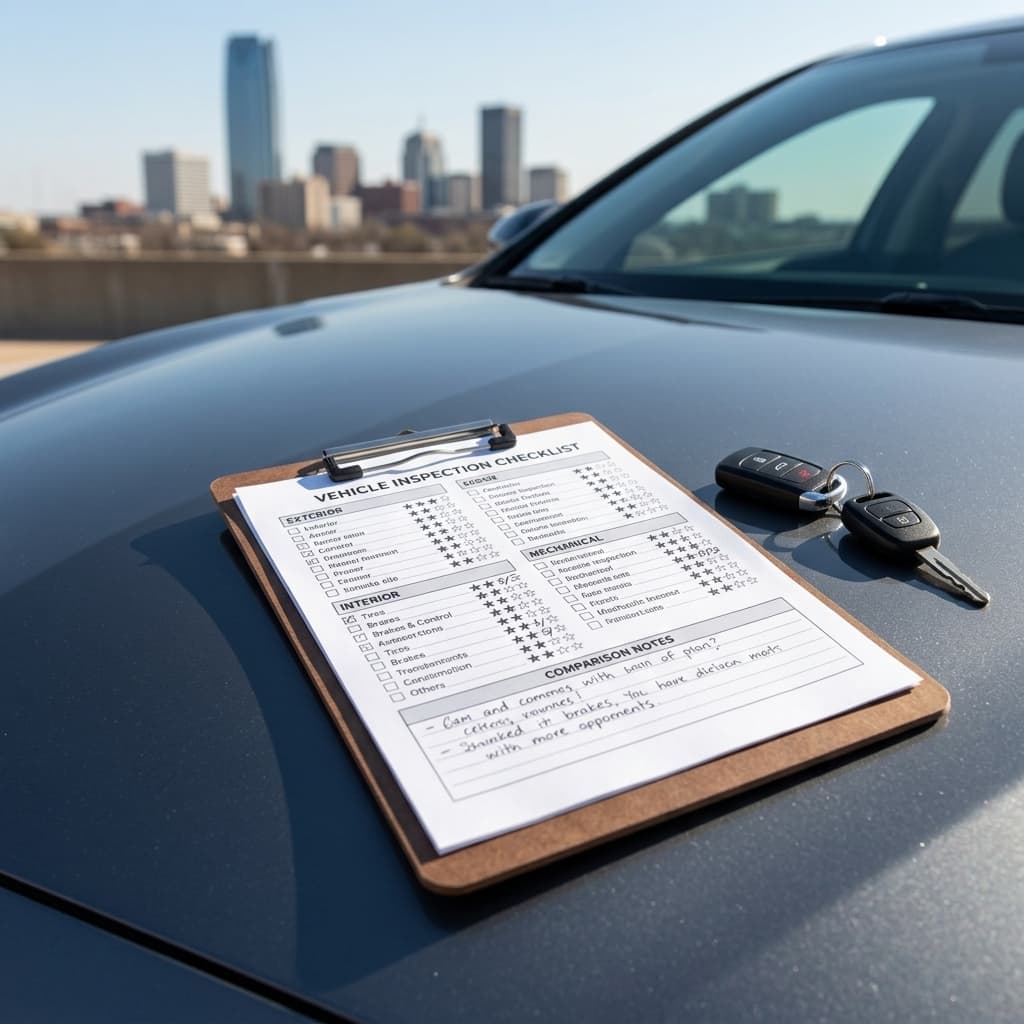
Search “top car insurance” and you’ll get ranked lists, star ratings, and “best of” badges — but almost none of them explain what the ranking is actually scoring. A company can sit at the top of a national list and still be the wrong fit for a driver commuting the Broadway Extension every morning or financing a truck through a lot off I-240. The core thing worth understanding before you trust any “top-rated” label is simple: those rankings measure a handful of specific things, and none of them is whether the policy fits your vehicle, your driving, and your budget in Oklahoma City. Save Money Car Insurance writes policies across the OKC metro, and this breaks down what the ratings behind “top car insurance” are really telling you.
The Three Things Behind Most “Top Car Insurance” Rankings
When a list calls a company one of the top car insurance companies, the score usually comes from three measurable inputs, not from a general sense of quality. The first is financial strength — an insurer’s ability to pay claims, especially when a lot of them land at once. Independent agencies like AM Best publish letter grades for this, and it matters more in Oklahoma than in calmer states because a single spring hailstorm across the metro can trigger thousands of comprehensive claims in the same week.
The second is customer satisfaction, typically measured through surveys on claims experience, billing, and service. The third is the complaint ratio — the number of confirmed complaints filed against a company relative to its size, tracked publicly through the National Association of Insurance Commissioners. A company can rate well on one of these and poorly on another, which is why a single “top-rated” badge rarely tells the whole story.
Why a Nationally Top-Rated Company Isn’t Automatically Top for You
National rankings average across millions of drivers in dozens of states, so they smooth over exactly the details that decide your rate and your claims experience in Oklahoma City. A company rated highly for its bundling discounts in a state with mild weather might handle OKC’s hail season very differently, and a top satisfaction score built largely on auto-pay billing says little about how a comprehensive claim gets processed after a storm rolls through Moore or Edmond.
What’s “top” for a specific OKC driver depends on things a national list never sees: whether the vehicle is financed and needs comprehensive and collision, whether the daily route runs through the I-35, I-40, and I-44 interchanges, and where the car is parked overnight. A good company for a paid-off commuter car and a good company for a financed truck used partly for DoorDash can be two different answers, even though both drivers might be reading the same ranked list. Our guide to what affects your rate in Oklahoma City covers the local pricing factors those rankings leave out.
What “Good” Coverage Looks Like Under Oklahoma Law
Any company worth considering has to start from the same legal floor. Oklahoma requires liability coverage of at least $25,000 per person and $50,000 per accident for bodily injury, plus $25,000 in property damage — written as 25/50/25 — under the state’s Compulsory Insurance Law. A top-rated company doesn’t change that minimum; what separates a good policy from a merely cheap one is what it lets you build on top of that floor.
For most OKC drivers, that means the freedom to add comprehensive and collision, adjust deductibles, and add a second vehicle without being pushed into a rigid package. Comprehensive matters here specifically because of hail and theft, and collision covers at-fault damage to your own vehicle. Our guide to cheap liability car insurance in Oklahoma explains how those limits work and when carrying more than the state minimum makes sense.
Ratings Say Little About the Coverage You Actually Need
A five-star badge tells you nothing about whether a company offers the specific coverage your situation calls for. A driver using their car for Uber Eats or DoorDash in Oklahoma City needs an insurer that offers a rideshare or delivery endorsement, because a standard personal auto policy generally won’t respond to a claim that happens mid-delivery — and a non-owners policy, the kind often used to reinstate a license after a lapse, won’t extend to that delivery use either. Neither of those gaps shows up in a national satisfaction score.
This is where matching the company to the driver beats chasing a ranking. Financing a new vehicle usually means a lender requires full coverage; if that pushes the payment out of reach, we can write liability-only and help you check whether Collateral Protection Insurance through the lienholder is a cheaper path than full coverage elsewhere. A “top” list won’t walk you through that — the fit does.
Turning “Top-Rated” Into a Real Quote
Ratings are a starting filter, not a decision. Once you’ve used financial strength and complaint history to rule out the weak options, the number that actually matters is your own quote on your own vehicle. Save Money Car Insurance provides a real quote in under 60 seconds with no phone call and no credit check, so an OKC driver can see actual pricing instead of a national average. If you’re weighing whether to stay with one insurer or shop around, our comparison of choosing one company versus getting multiple quotes is a useful next step before you renew or switch.
Answers to Common Questions About Top-Rated Car Insurance
What does a “top-rated” car insurance company actually mean? It usually reflects three measurable things: financial strength (the ability to pay claims), customer satisfaction survey scores, and the complaint ratio filed against the company relative to its size. It does not measure whether a policy fits your specific vehicle or driving situation.
Is the top-rated national company the cheapest in Oklahoma City? Not necessarily. National rankings average across many states and driving conditions, so the top-listed company isn’t automatically the best price or fit for an OKC driver whose rate depends on local factors like hail risk, commute route, and whether the vehicle is financed.
Does a top rating tell me if delivery driving is covered? No. Ratings don’t reflect whether a company offers a rideshare or delivery endorsement. A standard personal auto policy generally won’t cover a claim during Uber Eats or DoorDash use, so ask directly whether that coverage is available.