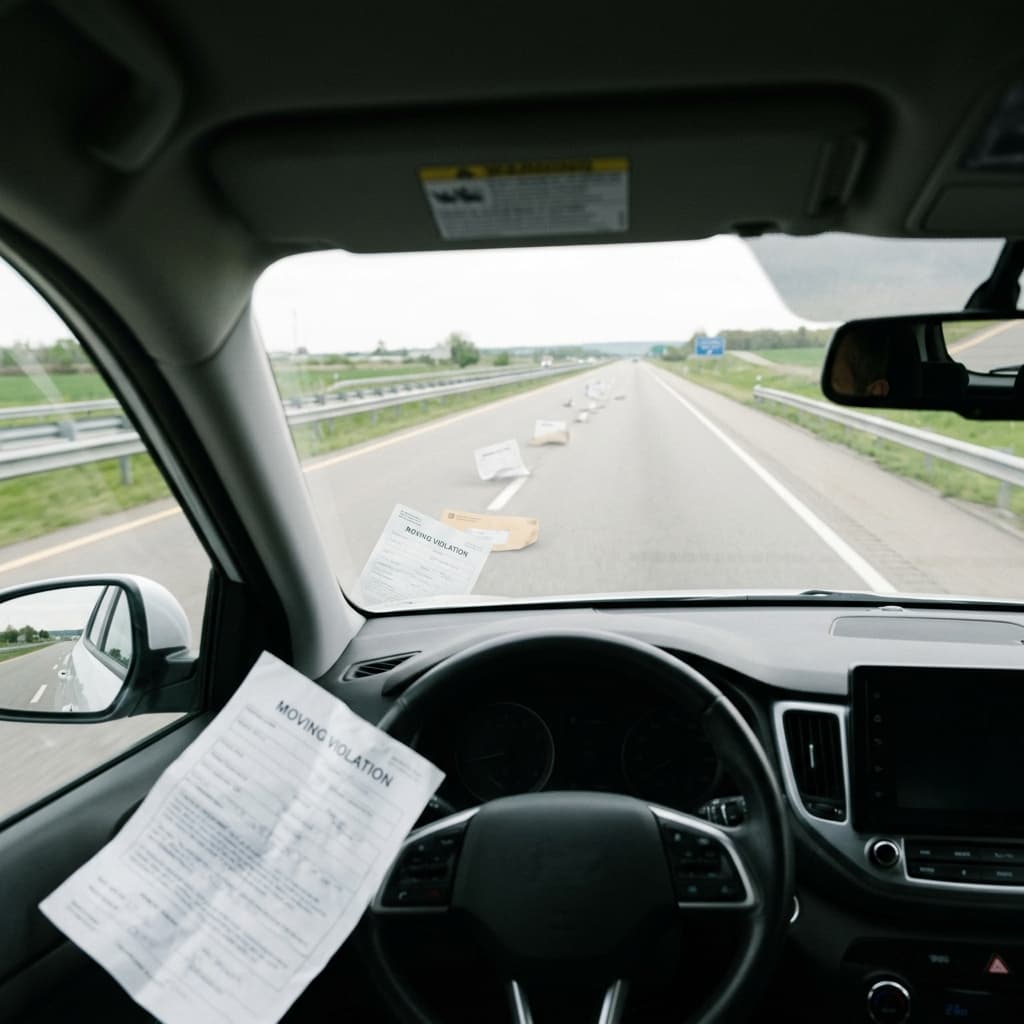
One Ticket, One Accident, One Mistake: How Tulsa Drivers Can Rebuild After Insurance Rate Hikes
A speeding ticket on Highway 169. A rear-end collision during rush hour on the Broken Arrow Expressway. A moment of distraction that turns into a moving violation.
For many Tulsa drivers, it only takes one mistake to trigger a noticeable increase in car insurance rates.
The frustrating part isn't always the ticket or accident itself. It's opening your renewal notice months later and realizing you're paying significantly more than you were before.
That's often when drivers start searching for cheap car insurance with bad driving record concerns, hoping to find a way back to affordable coverage.
The good news?
One mistake rarely tells the entire story.
In fact, most insurers care less about what happened once and more about what happens afterward.
That's why recovery is possible.
Why One Mistake Can Cost More Than Expected
Most people understand that tickets and accidents can affect insurance premiums.
What many don't realize is that the increase isn't simply a penalty for what happened.
Insurance companies use driving history to predict future risk. A speeding ticket, at-fault accident, reckless driving citation, or other violation becomes part of the information used to estimate the likelihood of future claims.
In other words, insurers aren't just looking backward.
They're looking forward.
That's why two Tulsa drivers with similar vehicles and coverage can suddenly receive very different renewal rates after one receives a ticket or causes an accident.
The event matters.
But what insurers believe that event says about future behavior often matters even more.
Insurance Companies Look for Patterns, Not Perfection
This is the single most important concept in the entire recovery process.
Insurance companies don't expect perfect driving records.
If they did, almost nobody would qualify for affordable coverage.
Instead, they look for patterns.
Imagine two Tulsa drivers receive identical speeding tickets while driving through the city.
The first driver receives another citation six months later.
The second driver spends the next three years without another violation.
By the time renewal periods arrive, those two drivers may be viewed very differently despite starting from the same place.
That's because insurers place significant weight on recent behavior.
A driver who gets one speeding ticket on Highway 169 and then drives incident-free for years is often viewed differently than someone who continues collecting violations.
That's good news for Tulsa drivers.
Recovery isn't about proving you're perfect.
It's about proving the mistake was the exception.
The Recovery Timeline After a Speeding Ticket
The First Year
The first year after a speeding ticket is usually when drivers feel the greatest impact.
The violation is still recent, so it often carries the most weight during policy renewals.
This is also when frustration tends to peak.
Many drivers assume they're stuck paying elevated premiums indefinitely.
In reality, the first year is often less about finding a quick fix and more about avoiding another mistake.
A second ticket frequently causes more long-term damage than the first.
Years Two Through Three
As time passes, the story your driving record tells begins to change.
Instead of seeing one recent violation, insurers start seeing a longer stretch of safe driving.
That's where recovery begins.
Every month without another citation helps demonstrate that the original ticket wasn't part of a larger pattern.
The Long-Term Outlook
Eventually, the speeding ticket becomes one event within a larger driving history rather than the defining feature of it.
While every insurer evaluates risk differently, older violations generally carry less weight than recent ones.
The Recovery Timeline After an At-Fault Accident
Immediately After the Accident
Accidents feel different because they involve actual claims.
Vehicle damage, repair costs, and claim payouts all become part of the equation.
For Tulsa drivers who regularly navigate crowded intersections near downtown, Interstate 44, or busy stretches of Highway 75, accidents can happen even when nobody leaves home expecting one.
Once the claim is filed, however, the focus shifts.
The question is no longer what happened.
The question becomes whether it's likely to happen again.
The Following Years
This is where consistency matters.
Drivers who avoid additional claims begin creating distance between themselves and the accident.
Over time, that clean history becomes increasingly important.
The Turning Point
Eventually, recent driving habits often become more influential than the accident itself.
The longer a driver demonstrates safe behavior, the easier it becomes for insurers to view the accident as an isolated incident instead of an ongoing concern.
The Recovery Timeline After a Major Violation
Not every mistake is treated equally.
Serious violations such as reckless driving, excessive speeding, or DUI convictions typically create a longer recovery timeline.
Why Recovery Takes Longer
Major violations raise bigger questions about future risk.
As a result, drivers may face fewer options and higher premiums in the short term.
That can feel discouraging.
But it doesn't mean recovery is impossible.
What Matters Most
The same principle still applies.
Safe driving.
Continuous coverage.
No additional violations.
Time alone helps.
Time combined with responsible driving habits helps even more.
Common Mistakes That Slow Recovery
Picking Up Another Ticket
Nothing slows progress faster than adding another violation to your record.
One mistake often looks very different than multiple mistakes occurring close together.
Filing Frequent Small Claims
Insurance exists to help when losses occur.
However, repeated claims can make drivers appear more likely to generate future costs.
Letting Coverage Lapse
Some drivers consider canceling coverage after rates increase.
Unfortunately, gaps in coverage can create another obstacle during the recovery process.
Assuming Rates Automatically Improve
This is one of the most common misconceptions.
Time matters.
But a clean driving record is what gives time its value.
When Do Insurance Rates Start Improving?
Can Insurance Rates Go Down After a Ticket?
Yes.
Many drivers become eligible for better rates as violations age and clean driving history grows.
Can Insurance Rates Go Down After an Accident?
Yes.
Drivers who avoid additional claims often put themselves in a stronger position over time.
How Long Does Recovery Take?
There isn't a universal timeline.
Every insurer evaluates risk differently.
However, drivers who maintain a clean record, keep continuous coverage, and avoid additional incidents generally create the strongest path toward lower rates.
What Tulsa Drivers Should Remember
The biggest mistake many drivers make after a rate increase is believing they're permanently stuck.
They're not.
A speeding ticket doesn't define your future.
An accident doesn't define your future.
Even a serious violation doesn't tell the entire story.
Every month of responsible driving becomes another piece of evidence that the incident was the exception rather than the rule.
That's what recovery is really about.
Not erasing the past.
Building a better pattern moving forward.
Frequently Asked Questions
How can I get cheap car insurance with a bad driving record in Tulsa?
The most effective long-term strategy is maintaining a clean driving record moving forward. As violations and accidents become older, many drivers find that more coverage options become available and premiums may improve.
Will one speeding ticket raise my insurance rates?
It can. The impact depends on the severity of the violation, your previous driving history, and the insurance company evaluating your record.
How long does an accident affect insurance rates?
Every company uses different rating factors, but recent accidents generally have a greater impact than older incidents.
Do insurance rates eventually go back down?
In many cases, yes. Drivers who avoid additional violations and maintain safe driving habits often improve their standing over time.
Is it possible to recover from a bad driving record?
Absolutely. Recovery takes time, but insurers often place significant weight on recent behavior. A clean record moving forward can help demonstrate lower risk.
Your Next Renewal Doesn't Have to Look Like Your Last One
A ticket, accident, or violation may have increased your rates, but it doesn't mean every insurance company will evaluate your situation the same way.
As your driving record improves, different options may become available.
At Save Money Car Insurance, we help Tulsa drivers compare coverage and understand what choices may exist after a rate increase.
Sometimes the most valuable thing you can do isn't dwell on the mistake.
It's find out what opportunities exist now that you're moving beyond it.
Conclusion
One ticket.
One accident.
One mistake.
That's often all it takes to increase your insurance costs.
But it isn't all it takes to define your future.
The drivers who recover most successfully aren't necessarily the ones with perfect records. They're the ones who understand that insurers look for patterns, not perfection.
Over time, a single mistake becomes part of your history instead of the headline of your driving record.
And that's when real recovery begins.